This post may contain affiliate links. Please read our disclosure policy.
Sweet, earthy, and incredibly versatile, beets are one of those vegetables that truly shine when cooked simply. If you’ve ever wondered how to roast beets so they come out tender, naturally sweet, and perfectly caramelized, this easy method is for you.
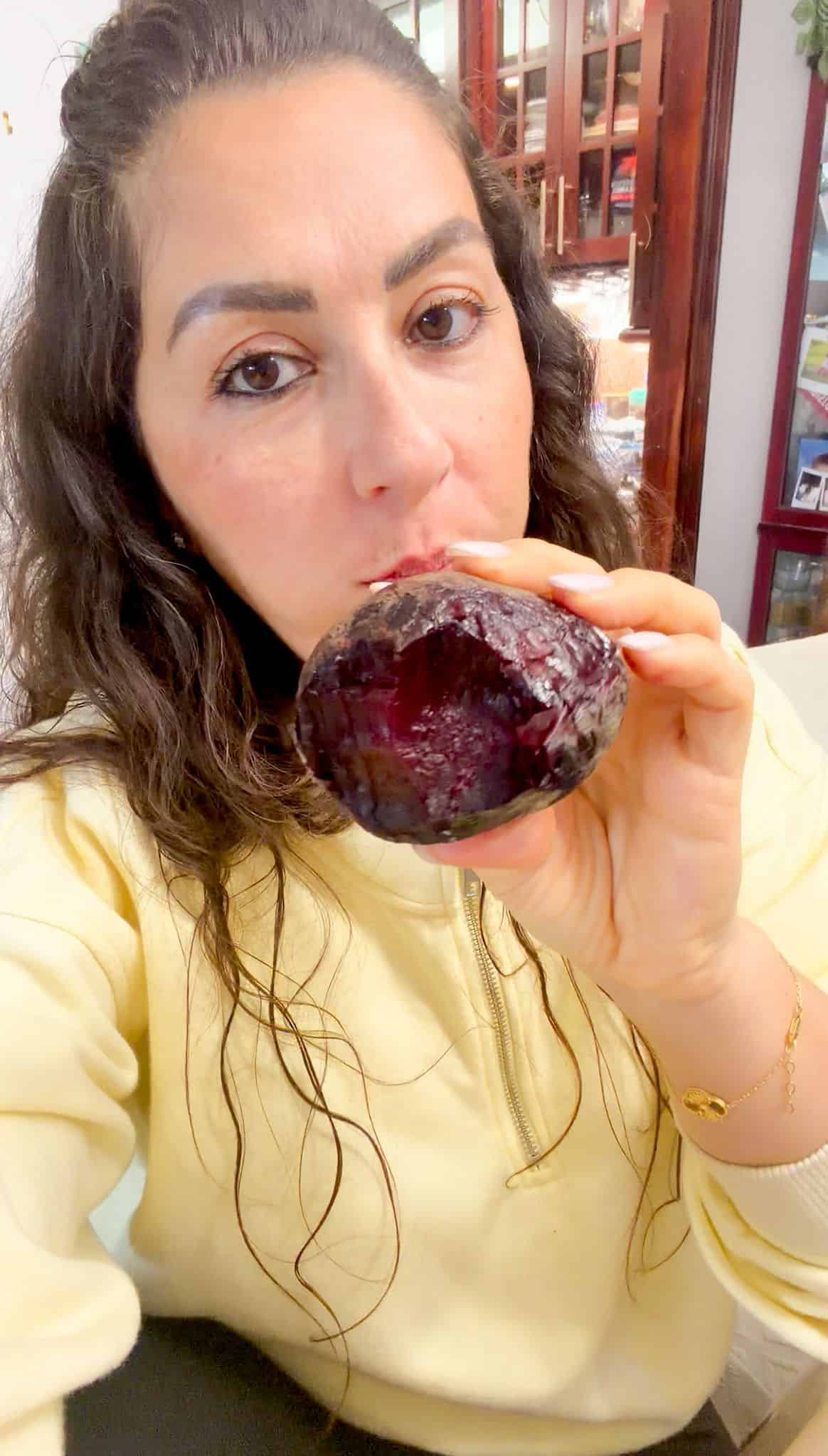
With just a handful of basic ingredients and a little oven time, you’ll learn how to bake or roast beets in a way that brings out their best flavor with no peeling required until after they’re cooked. Here is another way to cook beets to try.
Whether you enjoy them on their own, sliced into salads, straight off the pan, or prepped ahead for the week, these roasted beets are a versatile staple you’ll find yourself making again and again. Don’t miss trying my Beet Cucumber and Feta Salad.
Table of Contents
Recipe Overview
Flavor Profile: Naturally sweet, earthy, and lightly caramelized with a rich roasted depth
Method: Oven-roasted using parchment and foil to lock in moisture and enhance natural sugars
Skill Level: Beginner-friendly
Occasion: Perfect for everyday meals, meal prep, salads, or healthy side dishes
Texture: Tender and buttery on the inside with beautifully roasted, caramelized edges
Why This Recipe Works
Tender, melt-in-your-mouth texture: Baking the beets whole locks in moisture, resulting in perfectly soft and flavorful beets without drying them out.
Simple and reliable: This method is straightforward, requires minimal ingredients, and delivers consistent results every time.
Great for meal prep: Roasted beets keep well in the fridge, making them perfect for salads, grain bowls, and quick sides throughout the week.
Versatile in use: Enjoy them on their own, sliced into salads, blended into dips, or paired with cheeses and citrus.
How to Pick the Best Beets
Beets are the star of this recipe, and baking them brings out their natural sweetness like no other method. Roasting allows the sugars in the beets to caramelize, giving them a deep, earthy flavor with a soft, tender texture.
Choosing the right beets makes a big difference in flavor, texture, and roasting results. Here are some notes to look for when buying beets:
Choose smooth, intact skin: Look for beets with smooth, tight skin and avoid deep wrinkles, cracks, or large blemishes. Excessively wrinkled or cracked beets are often dry inside and won’t roast as tender or caramelized.
Choose smooth skin: The majority of the skin should be smooth and tight, without deep wrinkles, cuts, or large blemishes. Minor surface scuffs are normal, but avoid heavily damaged beets.
Medium-sized is best: Medium-sized beets tend to be sweeter and more tender. Large beets can have a tougher and earthier flavor.
Check the color: The color should be deep and vibrant. Dull or faded beets often lack flavor.
Don’t skip the greens: If the greens are still attached, they should look fresh, crisp, and bright. Wilted or slimy greens are sings for older beets.
Ingredients
- Beets
- Water
- Baking soda
You Will Also Need
- Parchment paper
- Aluminum foil
How to Roast Beets
Wash the beets thoroughly to remove any dirt.
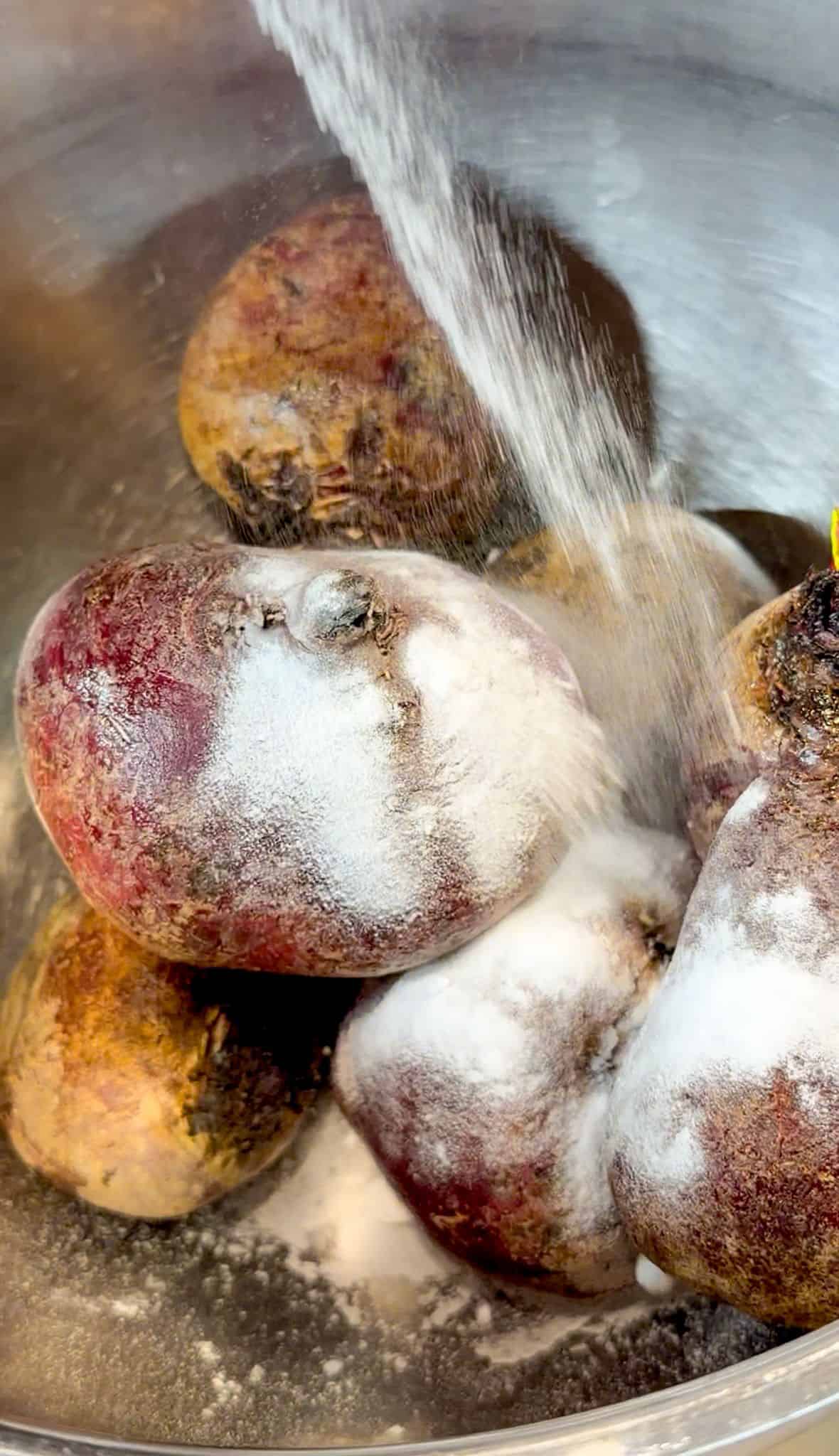
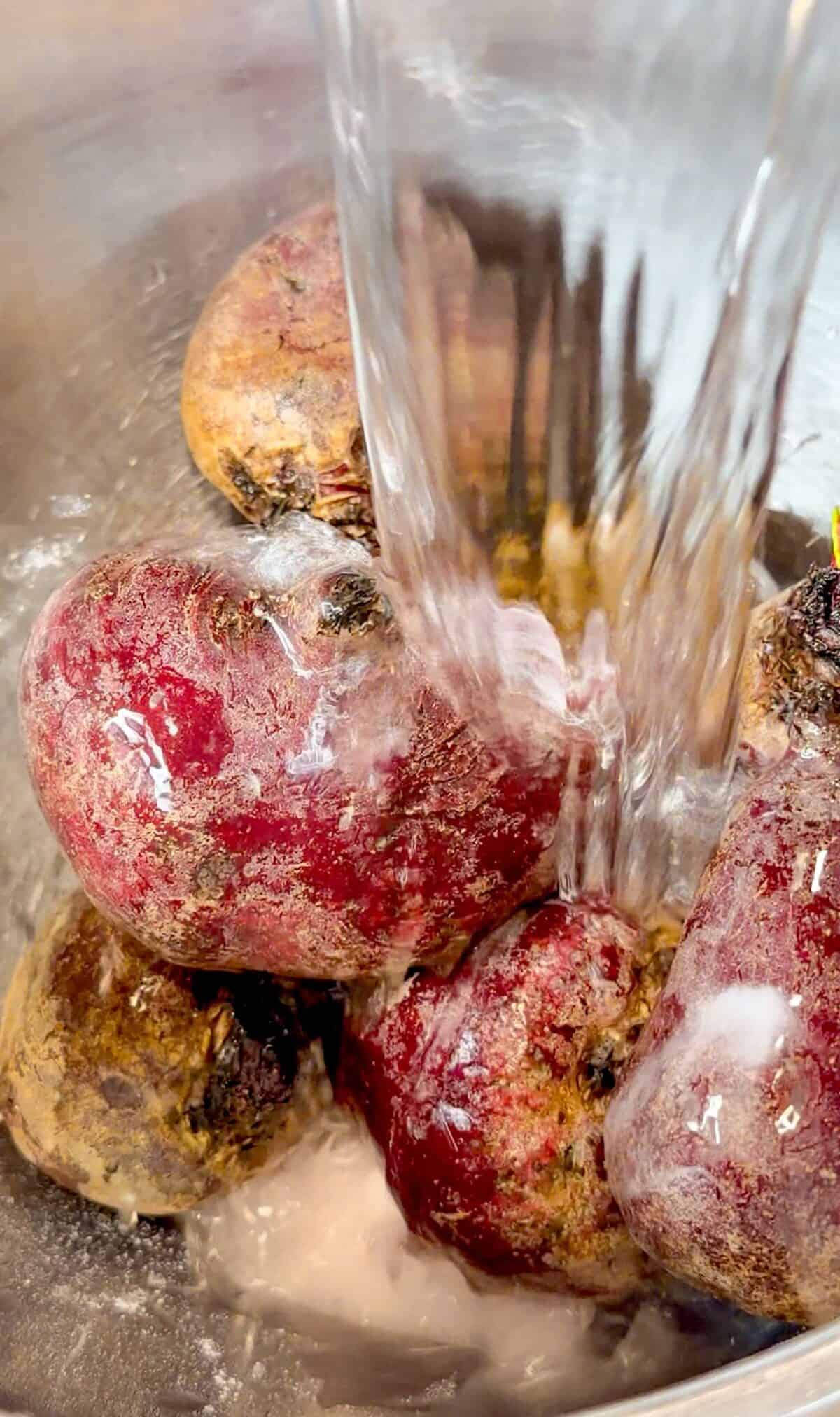
Place the beets in a bowl and cover them with water. Sprinkle 1 teaspoon of baking soda over the top and let them soak for 10–20 minutes.
Drain the beets and give them a second rinse to remove any remaining baking soda.
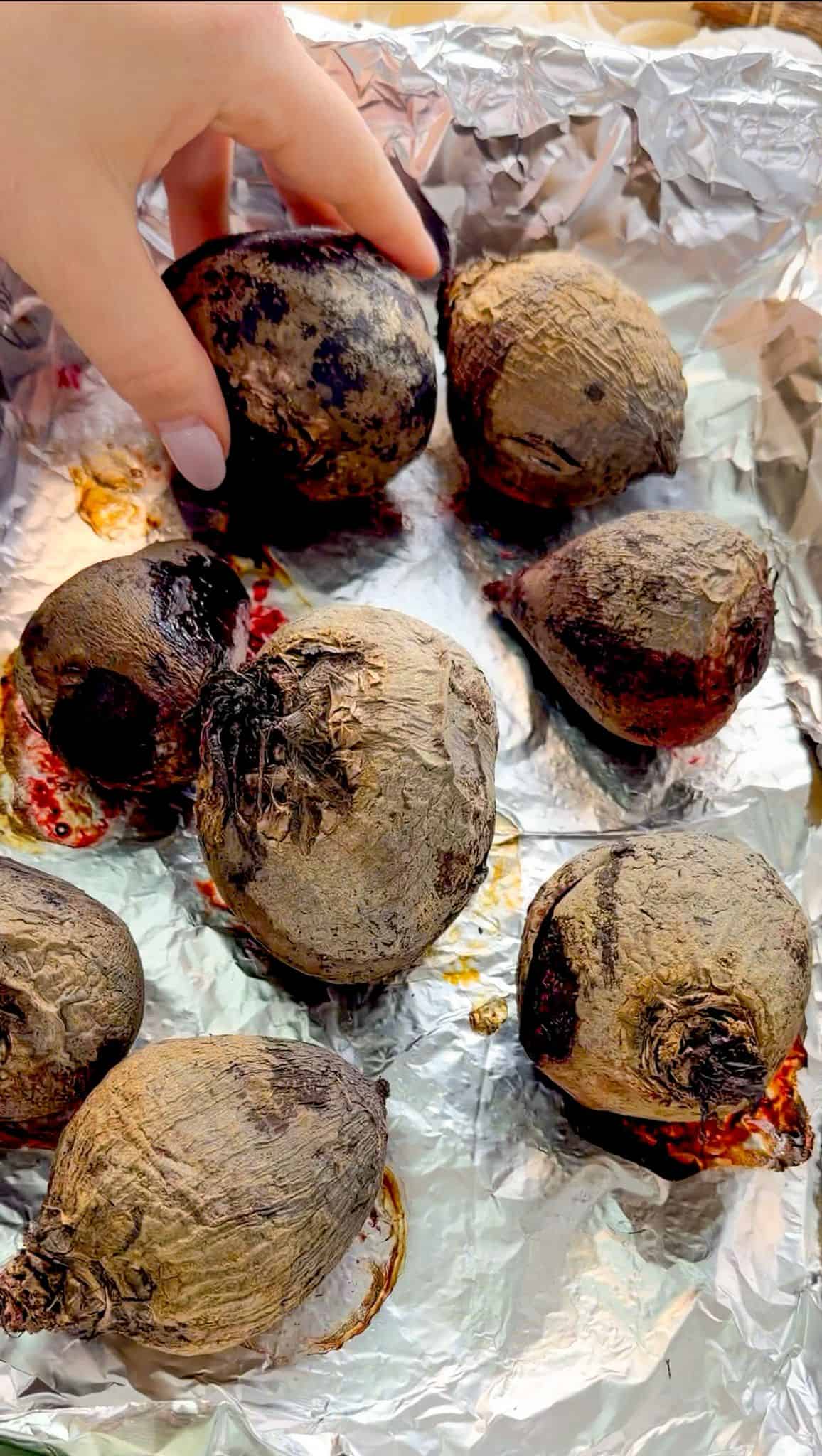
Line a baking sheet with parchment paper, then cover it with aluminum foil. Place the beets on the lined baking sheet.
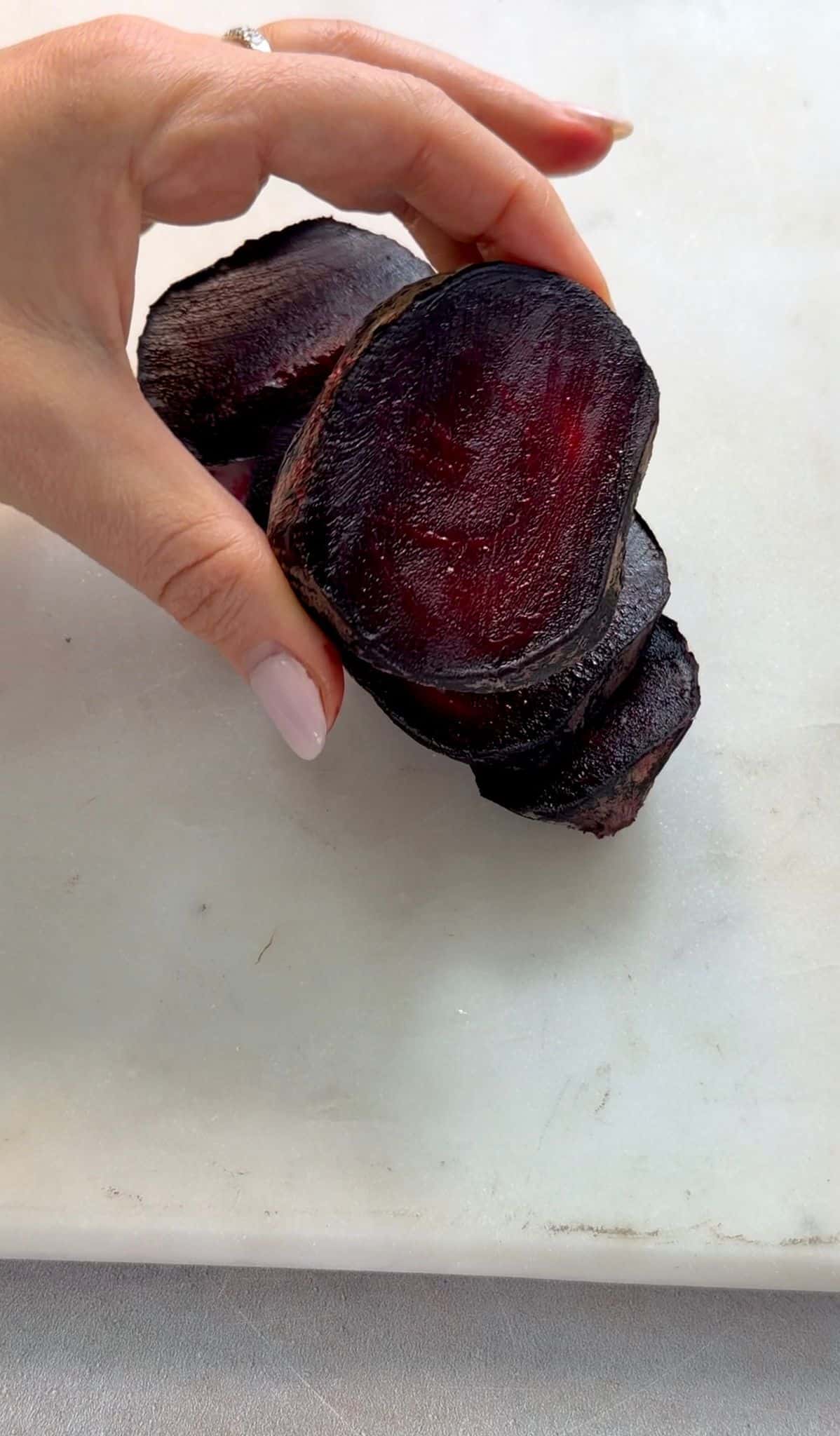
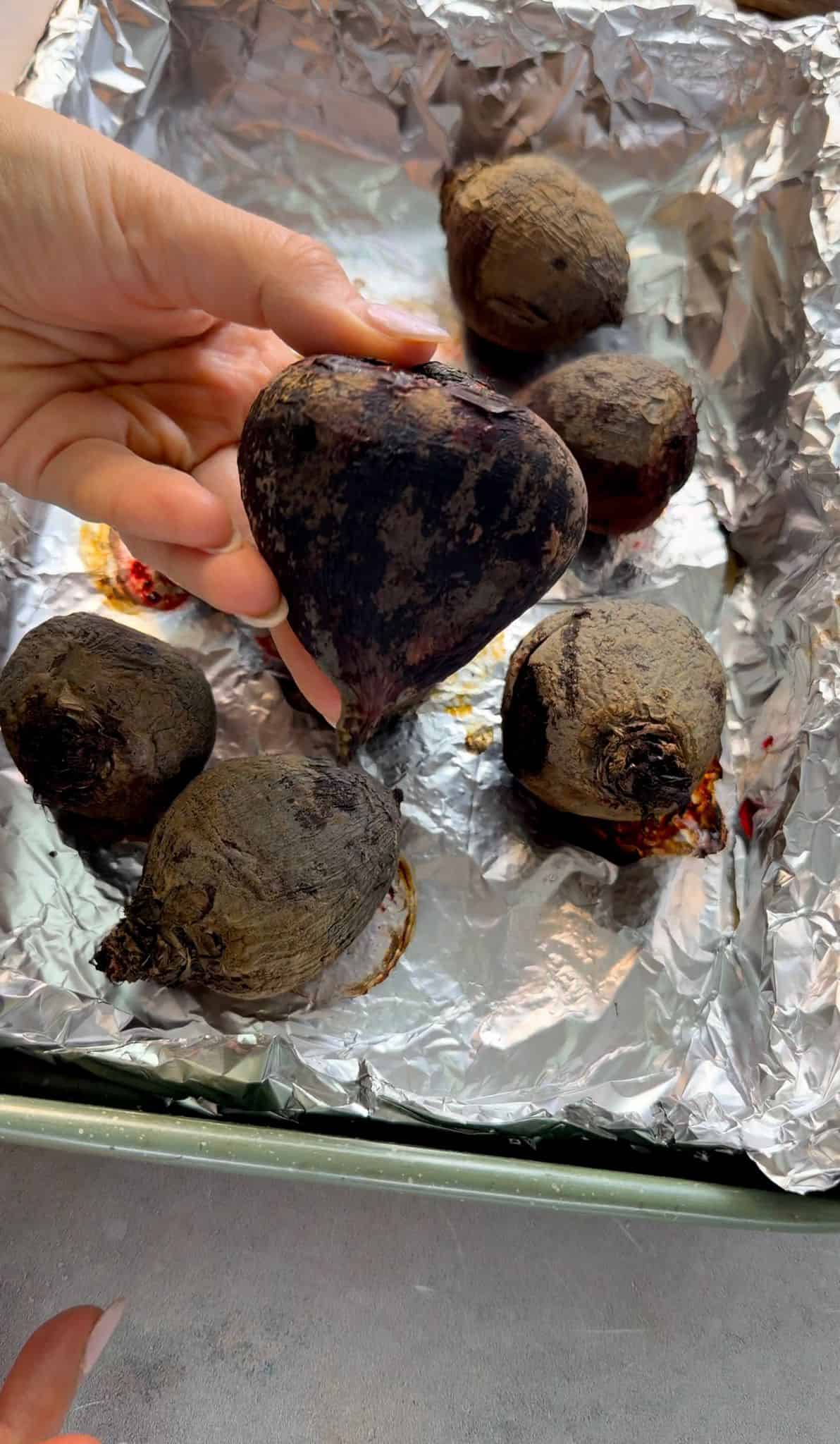
Bake at 400°F for about 1 hour. If your beets are large, bake them for 1 hour and 20 minutes. You’ll know they’re done when you can easily poke them with a knife and they feel soft and caramelized.
Delicious Ways to Enjoy Roasted Beets
Roasted beets are versatile, and you can enjoy them in many delicious ways:
Healthy snack: Eat them plain, straight from the fridge, or sliced with a squeeze of lemon. They’re naturally sweet and satisfying.
Simple side dish: Enjoy warm or at room temperature with a sprinkle of salt, olive oil, and fresh herbs.
Add to salads: Slice or cube the beets and toss them into green salads with goat cheese or feta, nuts, and a simple vinaigrette.
Beet carpaccio: Thinly slice and arrange on a plate with olive oil, lemon juice, flaky salt, and shaved cheese.
Variations
Olive oil and salt finish: After baking, peel and toss the beets with olive oil and flaky sea salt for a simple, classic flavor.
Herb roasted beets: Add fresh or dried rosemary, thyme, or dill after baking for an herby twist.
Garlic beets: Toss chopped, roasted beets with minced garlic and olive oil while they are still warm.
Citrus beets: Finish with a squeeze of lemon juice to brighten the natural sweetness.
Balsamic beets: Drizzle with balsamic glaze or vinegar for a sweet and tangy contrast.
Spiced beets: Sprinkle with cumin, black pepper, or smoked paprika for a deeper flavor.
Maple roasted beets: Lightly drizzle with maple syrup after baking for an extra touch of sweetness.
Recipe Tips
Use uniform size: Choose similar-sized beets so they roast evenly and finish cooking at the same time.
Don’t skip the baking soda soak: It helps loosen dirt and makes the beets easier to clean, especially if they’re very earthy.
Roast with skins on: Keep the skins on while roasting to lock in moisture and preserve their natural sweetness. The skins will slide off easily once cooked.
Seal in moisture: Wrap beets well with foil to prevent drying out and encourage caramelization rather than burning.
Check doneness: Insert a knife or skewer into the center; it should go in smoothly with no resistance.
Allow to cool: Let beets cool slightly before handling, as this makes peeling and slicing much easier.
Common Mistakes to Avoid
Overcrowding the baking sheet: If the beets are packed too tightly, they’ll steam instead of roast. Give them space so they caramelize properly.
Under-baking large beets: Larger beets need more time. If a knife doesn’t slide in easily, keep baking until they’re fully tender.
Not lining the pan properly: Beets release sticky juices as they roast. Skipping parchment or foil can lead to burning and difficult cleanup.
Storage Tips
Refrigerating: Store roasted beets in an airtight container in the fridge for up to 5 days. Keep them whole for longer freshness, and slice or chop just before using.
Freezing: Roasted beets freeze well for up to 3 months. Peel, slice, and store in freezer-safe bags to remove excess air.
Reheating: Enjoy cold, at room temperature, or gently reheat in the oven or skillet. Avoid microwaving for too long to prevent drying.
Meal prep: These roasted beets are perfect for meal prepping. You can bake beets ahead of time, then use them throughout the week in salads, grain bowls, wraps, or as a side.
Frequently Asked Questions
No. Baking beets with the skin on helps lock in moisture and sweetness. The skins slide off easily once they’re cooked.
They’re ready when a knife slides in easily and the beets feel tender and caramelized.
Yes! This method works perfectly for red, golden, or Chioggia beets.
Yes. They’re delicious chilled, especially in salads or as a quick snack.
You Will Also Love To Try
Side Dishes
Baked French Fries
Appetizers
Sautéed Mushrooms and Onions

Appetizers
Grilled Corn with Spicy Cajun Butter

How to Roast Beets in the Oven (Easy Step-by-Step Guide)
Ingredients
- Beets, as many as you like
- Water
- 1 teaspoon Baking soda
Instructions
- Wash the beets thoroughly to remove any dirt.
- Place the beets in a bowl and cover them with water. Sprinkle 1 teaspoon of baking soda over the top and let them soak for 10–20 minutes.
- Drain the beets and give them a second rinse to remove any remaining baking soda.
- Line a baking sheet with parchment paper, then cover it with aluminum foil. Place the beets on the lined baking sheet.
- Bake at 400°F for about 1 hour. If your beets are large, bake them for 1 hour and 20 minutes. You’ll know they’re done when you can easily poke them with a knife and they feel soft and caramelized.