This post may contain affiliate links. Please read our disclosure policy.
Prep Time: 10 minutes | Cook Time: 45 minutes | Total: 1 hour 5 minutes | Servings: 6 | Cuisine: Lebanese / Middle Eastern | Course: Main Dish, Lunch, Dinner | Diet: Vegan, Gluten-Free
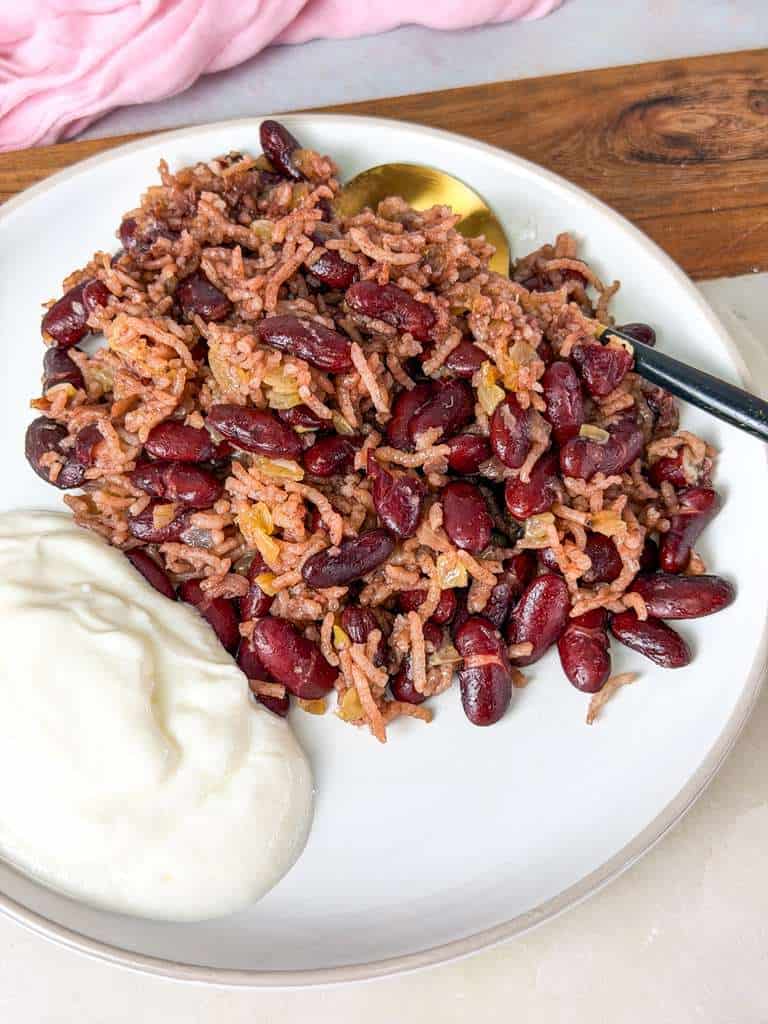
This recipe didn’t start in a test kitchen. It started in a farmhouse in Lebanon, where my dad’s parents made a simple pot of red beans and rice to feed their family. Beans and rice together: filling, affordable, nourishing, and deeply satisfying. My mom learned it from them, made it throughout my childhood, and it became one of those dishes I never thought to question. It was just always there, always good, always enough.
I still make lubya hamra today, and I still crave it the same way I did growing up. There’s something about the earthy red beans, warm seven-spice, and deeply golden caramelized onions folded in at the end that creates a flavor that’s hard to describe but impossible to forget. My neighbor, who is Cuban and grew up eating red beans and rice his whole life, tried it once and couldn’t stop talking about how different it tasted. The Lebanese way, with our seven spices and that technique of cooking the rice in the reserved bean water, just makes all the difference.
This is a weekday dish in our house. Not an occasion recipe, not something I save for company. I make it whenever I crave it, which is often, and one pot lasts us all week. My daughters enjoy it, my husband takes it to work for lunch, and I’ve eaten it every day for a week without getting tired of it. It is that kind of recipe. You will also love trying Braised Green Beans- Loubieh Bzeit, Lebanese Okra Stew (Bamya), and Green Bean & Beef Stew (Loubia bi Lahme).
Why You’ll Love This Recipe
- Only 6 core ingredients plus water, salt, and olive oil
- Naturally vegan and gluten-free with zero substitutions needed
- One pot from start to finish with minimal cleanup
- The caramelized onion technique takes this from a simple bean dish to something deeply flavorful
- Cooking the rice in reserved bean water infuses every grain with earthy, savory depth
- Packed with plant-based protein and fiber from the red beans
- Excellent for meal prep: stores well for 5 days and reheats beautifully
- A genuine family recipe passed down from my grandparents in Lebanon
Ingredients
Red beans: The most important ingredient in this dish. I use large red beans from the Heartland brand, available at Restaurant Depot. It tastes like chestnuts, some of the best beans I have ever had. Either large or small dried red beans work well in this recipe. What matters most is quality and freshness. Fresher dried beans cook more evenly and have better flavor.
Water: Reserve 1 cup of the cooking water after boiling the beans before draining. That starchy, burgundy-tinted liquid adds deep flavor to the rice when cooked. It infuses every grain with the bean’s flavor from the inside out. Do not skip this step, and do not substitute with plain water.
Basmati rice: Long-grain basmati rice is the right choice here. Its individual grains stay separate and fluffy, which creates the right texture for this dish. Rinse the rice until the water runs clear before cooking.
Onions: The onions do double duty in this recipe. Half are caramelized until deeply golden and set aside as a topping. The other half stays in the pot and cooks into the rice, adding sweetness and body to the whole dish.
Seven spice (baharat): It’s essential to get the authentic Lebanese flavor; don’t substitute. Check out my blend here.
Olive oil: Used generously to sauté and caramelize the onions, and added directly to the pot with the rice and beans. Use extra virgin olive oil for the best flavor.
Salt: Add salt according to taste and preference.
Substitutions and Variations
Bean Options: Any variety of dried red bean works: small red beans, large red kidney beans, cranberry beans, or pinto beans. Each has a slightly different flavor and texture, but all produce a delicious result. I prefer the large Heartland brand red bean from Restaurant Depot for its chestnut-like flavor, but any good-quality red bean will produce a great dish. Avoid canned beans, as the recipe depends on the reserved bean cooking water.
Rice Options: Basmati is the recommended rice for its fluffy, non-clumping texture. Long-grain white rice is a close substitute. Medium-grain rice can be used, but it will produce a slightly stickier result. Avoid short-grain rice for this dish as it will turn the pilaf mushy rather than fluffy.
Make It Spicier: Add a pinch of red pepper flakes or a small dried chili pepper when sautéing the onions. A small amount of paprika added with the seven spices also gives a pleasant warmth and a deeper color to the rice.
Add Garlic: 2-3 cloves of minced garlic added to the pot alongside the rice and beans deepens the savory flavor of the dish considerably. This is a natural variation that works beautifully with the seven spices.
Use Brown Rice: For a higher-fiber version, use brown basmati rice. Increase the water by about half a cup and extend the cooking time accordingly. The flavor will be nuttier and the texture slightly chewier.
How to Make Lubya Hamra
Step 1: Cook the Red Beans
Rinse the dried red beans under cold water. Add to a large pot with enough water to cover by several inches.
Bring to a boil over high heat and cook for about 40 minutes, or until the beans are fully tender and cooked through. They should be soft enough to press easily between two fingers with no resistance.
Before draining, carefully ladle out and reserve exactly 1 cup of the bean cooking water. This liquid is essential for the next step. Drain the remaining water and set the cooked beans aside.
Step 2: Caramelize the Onions
While the beans are cooking, heat a ¼ cup of olive oil in a large pot over medium heat. Add the sliced onions. Sauté, stirring occasionally, until the onions are golden, caramelized, and sweet.
Once done, remove half of the caramelized onions and set them aside in a bowl. These will go back on top at the end.
Step 3: Build the Pilaf
To the same pot with the remaining caramelized onions still in it, add the cooked red beans, the rinsed and drained basmati rice, the reserved 1 cup of bean water, the additional ¼ cup of water, 2 tablespoons of olive oil, salt, and seven spice. Stir gently to combine everything without breaking the beans.
Step 4: Cook the Rice
Bring the pot to a boil over high heat. Once boiling, reduce the heat to low, cover tightly, and cook for 15-18 minutes until the rice is tender and fully cooked. Do not lift the lid during this time.
Step 5: Rest and Finish
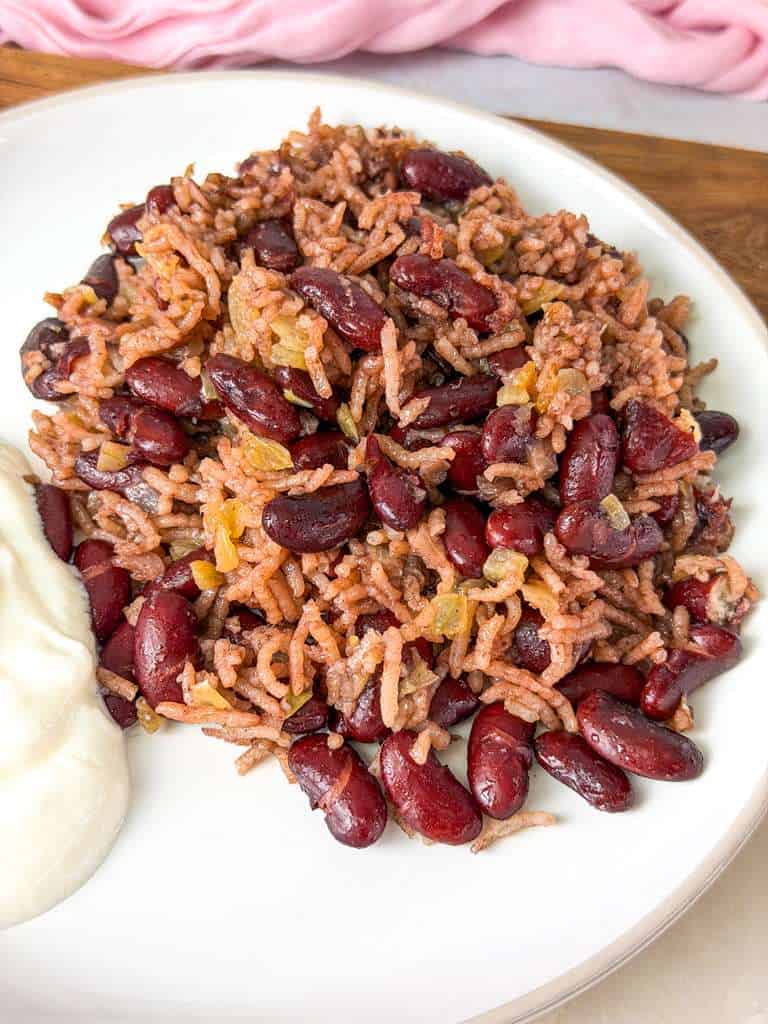
Turn off the heat. Place the reserved caramelized onions on top of the rice. Cover the pot again and let the dish rest for 10 minutes.
This resting period allows the steam to finish cooking the rice, the onions to warm through by residual heat, and all the flavors to settle and meld.
Step 6: Serve
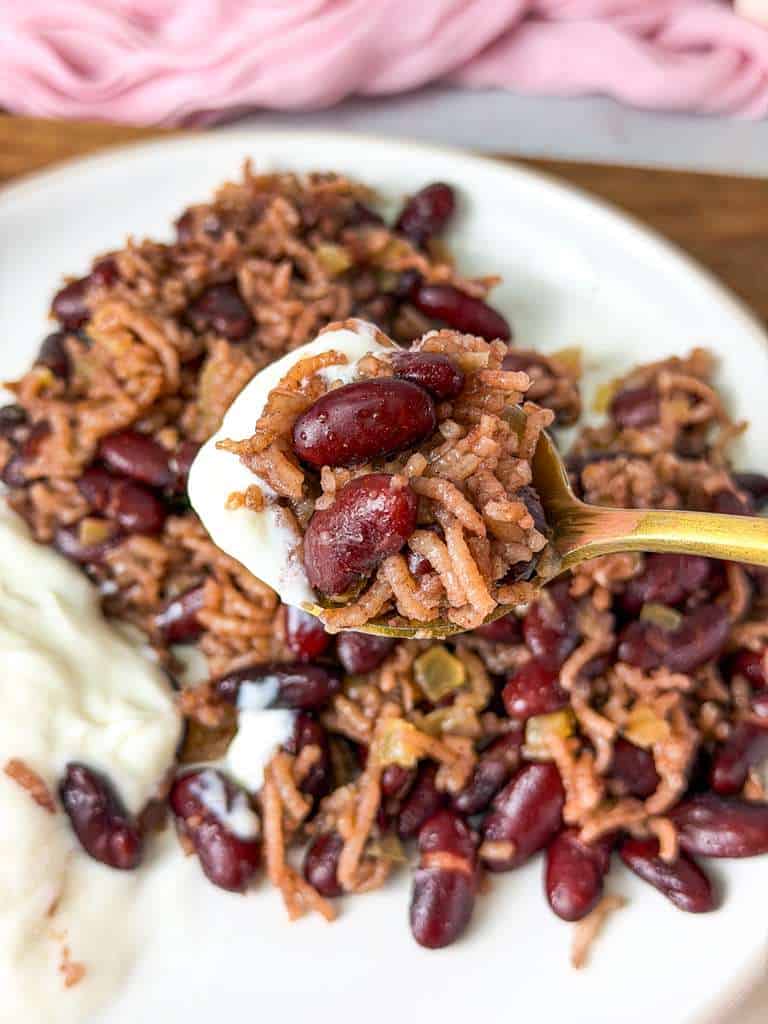
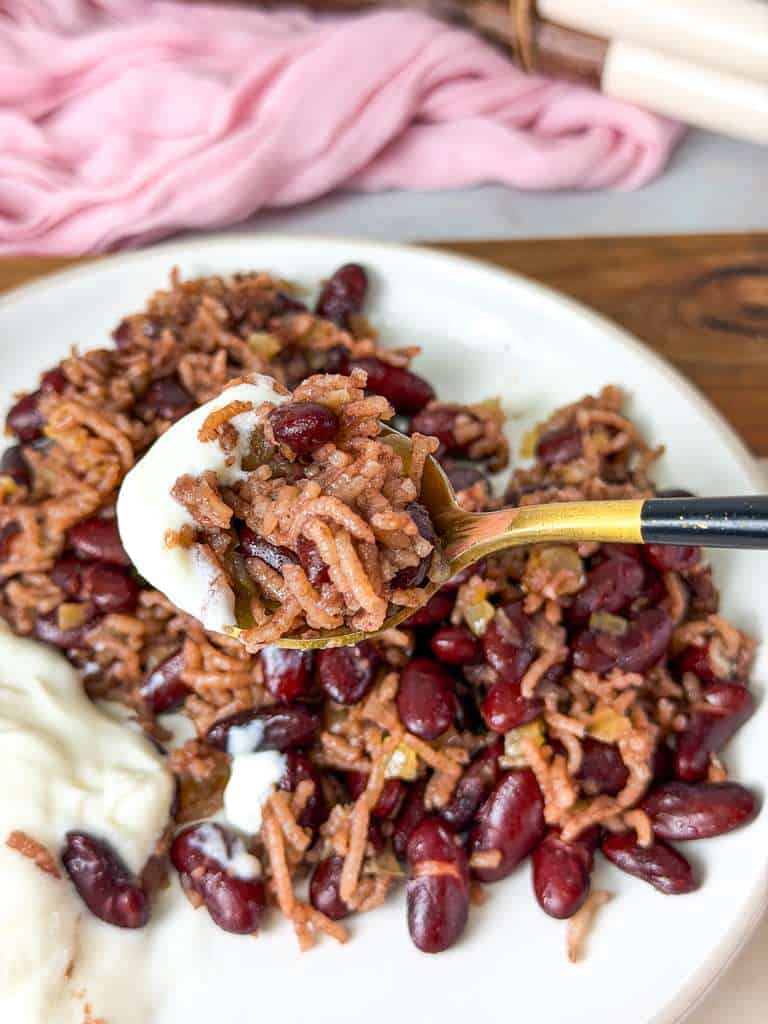
Gently fluff the rice with a fork and serve warm with a generous spoonful of plain yogurt on the side or directly on top.
Recipe Tips
The bean quality matters more than anything else. I strongly recommend the Heartland large red beans from Restaurant Depot for their exceptional chestnut-like flavor. If you cannot find them, use any good-quality dried red beans, but avoid old dried beans that have been sitting in your pantry for too long, as they take longer to cook and have less flavor.
Make sure the beans are fully cooked before building the pilaf. Undercooked beans are the biggest mistake people make. Press one between your fingers before draining. It should give with zero resistance. If there is any firmness left, keep cooking. Undercooked beans will not soften further once the rice is added and the liquid is absorbed.
Save the bean water; it is not optional. The single step most home cooks overlook is reserving 1 cup of the bean cooking water before draining. That starchy liquid is what cooks the rice and gives it an earthy depth that plain water simply cannot replicate. Set a reminder before you drain the pot.
Do not rush the onions. The caramelized onions are the soul of this lubya hamra recipe. Cook them on medium heat until they are truly deep golden and sweet, not just soft and pale.
What to Serve with Lubya Hamra
This is a complete, filling meal on its own. These are the pairings that work best:
- Plain yogurt: the most traditional and essential accompaniment. I serve it with 100% organic plain yogurt. You can also enjoy it with a bowl of cucumber-yogurt mint garlic salad.
- A plate of raw vegetables: sliced bell peppers, radishes, cucumber, and green onions on the side adds freshness and crunch that contrasts beautifully with the warm, soft pilaf
- Pickled vegetables: Lebanese pickled turnips, pickled cucumbers, or mixed pickles add a bright acidity that cuts through the richness of the beans and olive oil
- Fattoush salad or simple Middle Eastern salad: a crisp, lemony Lebanese salad that pairs naturally with any rice and bean dish
Storage Tips
Refrigerator: Store leftovers in an airtight container in the fridge for up to 5 days. The flavors deepen as the dish sits, and the leftovers are genuinely excellent.
Freezer: Lubya hamra freezes well for up to 3 months. Let it cool completely, portion into freezer-safe containers, and freeze. Thaw overnight in the refrigerator before reheating.
Reheating: Reheat on the stovetop over low to medium heat with a small splash of water (about 2 to 3 tablespoons) to loosen the rice. Stir gently and cover for a few minutes until warmed through. The microwave also works for individual portions. Add a damp paper towel over the top to prevent the rice from drying out.
Meal Prep: This is one of the best meal prep dishes in my collection. Make a full batch on Sunday, portion it into containers, and you have satisfying, protein-rich, flavorful lunches and dinners ready for the whole week.
Frequently Asked Questions
Lubya hamra is a Lebanese one-pot dish of red beans and basmati rice cooked together and topped with caramelized onions. The rice is cooked in bean water for deep flavor. The name means red beans in Arabic.
The water left over from boiling the red beans is starchy, slightly sweet, and deeply flavored from the beans themselves. Using it to cook the rice means every grain absorbs that flavor from the inside out, rather than just being seasoned on the surface.
It is not recommended. The dish depends on the reserved bean cooking water to cook the rice and build flavor. Canned beans come packed in a liquid that is not the same and should not be used as a substitute. If you are short on time, use canned beans and replace the bean water with vegetable broth, but the flavor will be weaker.
No, both belong to the Lebanese tradition, but they are distinct recipes with distinct flavors. Mujadara uses lentils, while Lubya Hamra uses red beans.
Dried red beans need about 40 minutes of boiling to become fully tender. The exact time depends on the age and size of the beans. Always test the beans before draining by pressing one between your fingers. It should be completely with no firmness or chalky center.
Yes. Make a full batch, let it cool, and refrigerate. Reheat with a splash of water on the stovetop or in the microwave. It keeps for 5 days in the fridge and is excellent for meal prep.
Must-Try Lebanese Recipes
Main Dish
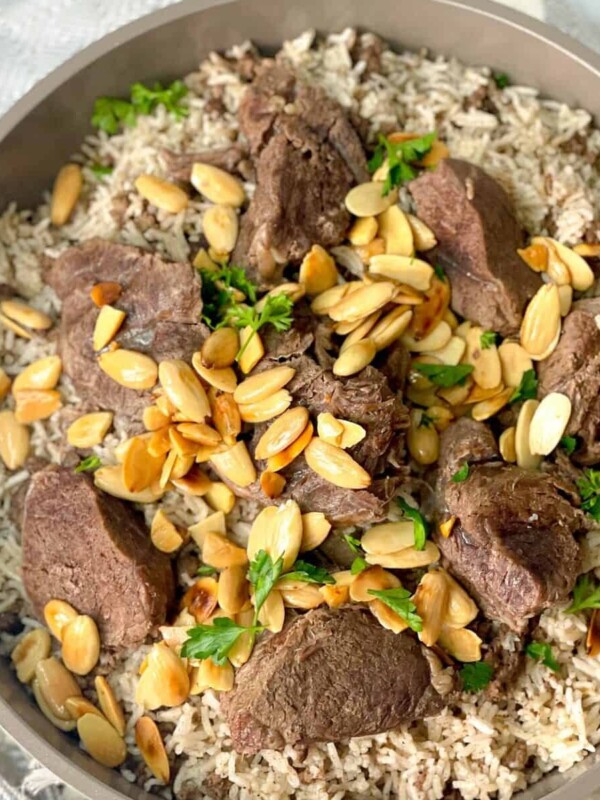
Mansaf (Lebanese Rice with Meat)
Middle Eastern Recipes
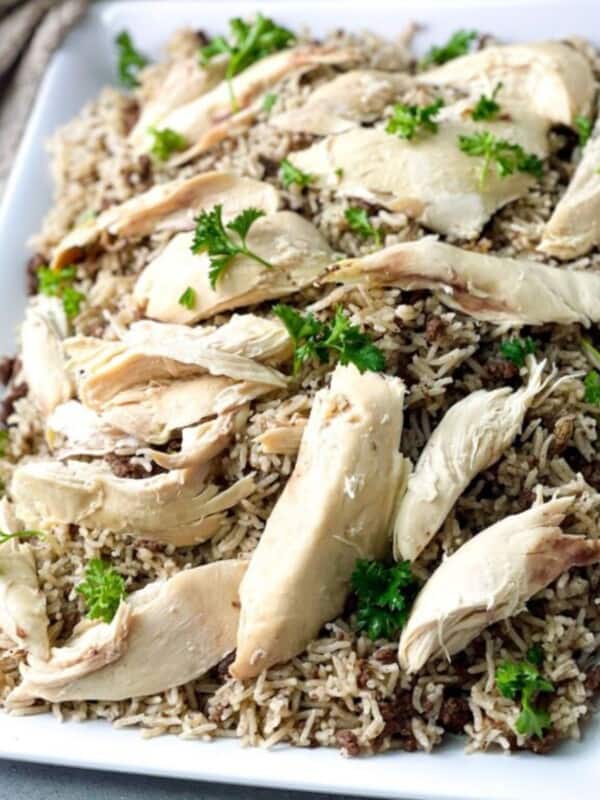
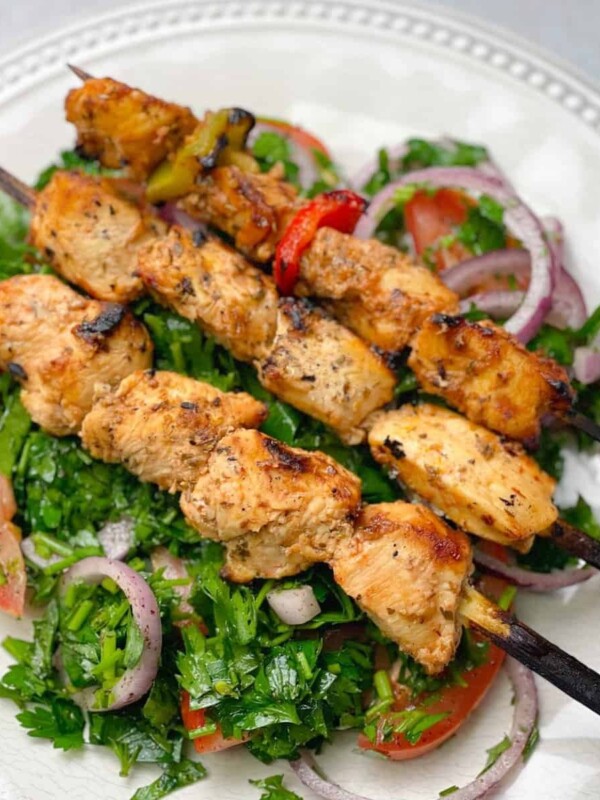
Lebanese Chicken and Rice (Riz a Djej)
Main Dish
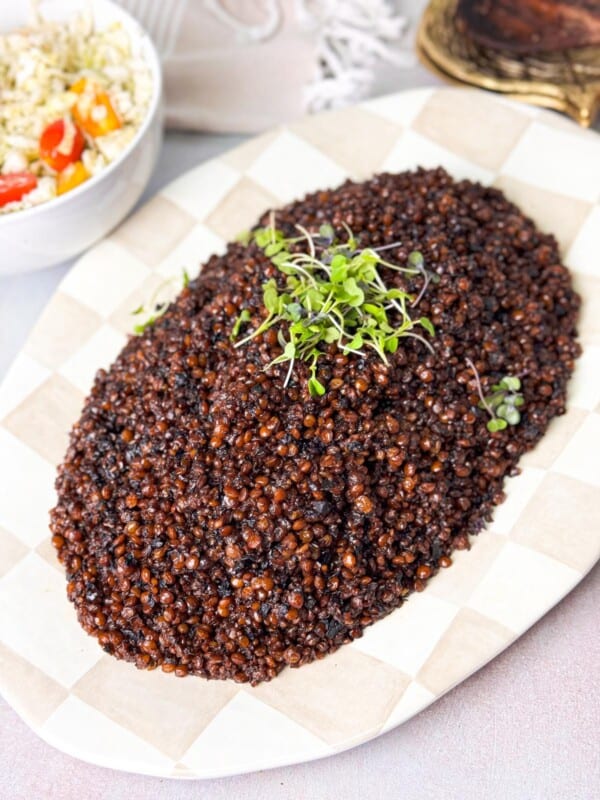
Mujadara Hamra (Lentils and Bulgur)
Lubya Hamra (Lebanese Red Beans and Rice)
Ingredients
- 3 cups Red beans, Heartland brand is my favorite
- 1 cup Basmati rice
- 2 Onions, large
- ¼ cup Extra virgin live oil
- 1¼ cups Water
- ½ teaspoon Seven spices
- 1 teaspoon Salt
Instructions
- Rinse the dried red beans under cold water. Add to a large pot with enough water to cover by several inches. Bring to a boil over high heat and cook for about 40 minutes, or until the beans are fully tender and cooked through. Before draining, carefully ladle out and reserve exactly 1 cup of the bean cooking water.
- Heat a ¼ cup of olive oil in a large pot over medium heat. Add the sliced onions. Sauté, stirring occasionally, until the onions are golden, caramelized, and sweet. Once done, remove half of the caramelized onions and set them aside in a bowl.
- To the same pot with the remaining caramelized onions still in it, add the cooked red beans, the rinsed and drained basmati rice, the reserved 1 cup of bean water, the additional ¼ cup of water, 2 tablespoons of olive oil, salt, and seven spice. Stir gently to combine everything without breaking the beans.
- Bring the pot to a boil over high heat. Once boiling, reduce the heat to low, cover tightly, and cook for 15-18 minutes until the rice is tender and fully cooked. Do not lift the lid during this time.
- Turn off the heat. Place the reserved caramelized onions on top of the rice. Cover the pot again and let the dish rest for 10 minutes.
- Gently fluff the rice with a fork and serve warm with a generous spoonful of plain yogurt on the side or directly on top.
Notes
- The bean quality matters more than anything else. I strongly recommend the Heartland large red beans from Restaurant Depot for their exceptional chestnut-like flavor. If you cannot find them, use any good-quality dried red beans, but avoid old dried beans that have been sitting in your pantry for too long, as they take longer to cook and have less flavor.
- Make sure the beans are fully cooked before building the pilaf. Undercooked beans are the biggest mistake people make. Press one between your fingers before draining. It should give with zero resistance. If there is any firmness left, keep cooking. Undercooked beans will not soften further once the rice is added and the liquid is absorbed.
- Save the bean water; it is not optional. The single step that most home cooks overlook is reserving that 1 cup of bean cooking water before draining. That starchy liquid is what cooks the rice and gives it an earthy depth that plain water simply cannot replicate. Set a reminder before you drain the pot.
- Do not rush the onions. The caramelized onions are the soul of this dish. Cook them on medium heat until they are truly deep golden and sweet, not just soft and pale.