
This post may contain affiliate links. Please read our disclosure policy.
Prep Time: 30 minutes | Cook Time: 60 minutes | Total: 1 hr 30 min | Servings: 6 | Cuisine: Lebanese / Middle Eastern
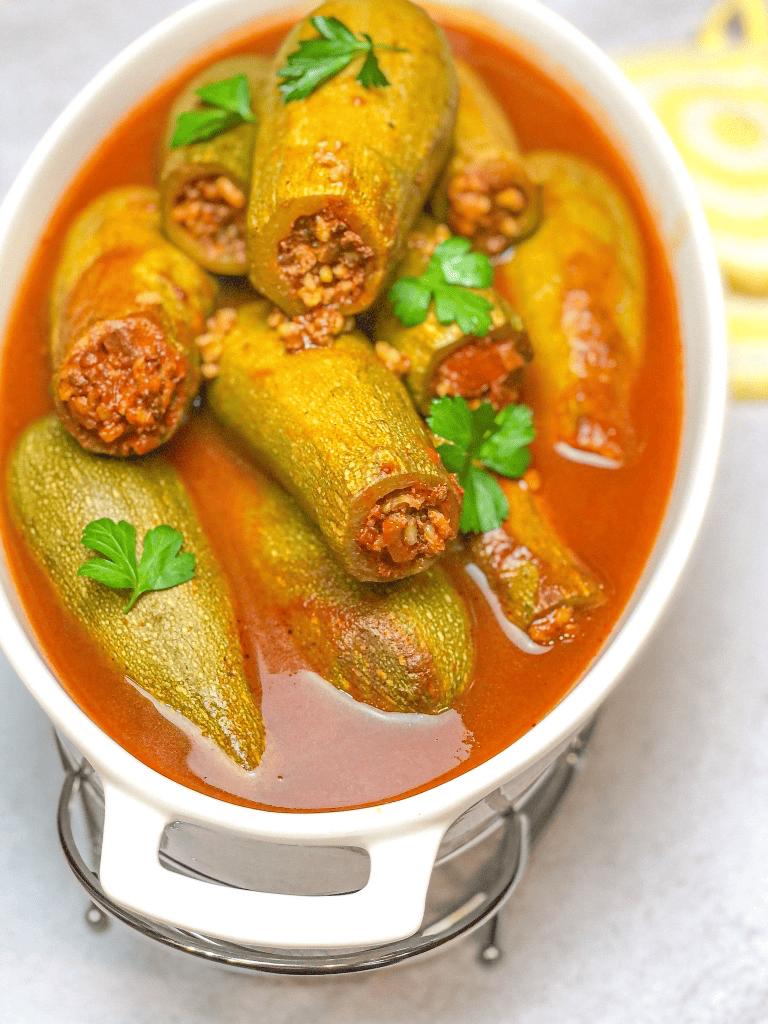
Some dishes are more than just food. They are a love language. In our Lebanese household, kousa mahshi (meat and rice stuffed squash) has always been one of those dishes. Whenever I arrived at my mom’s house in Michigan, I knew she was happy to have me there the moment I smelled the rich tomato broth simmering on the stove. She would have a whole pot of stuffed squash waiting, alongside a platter of grape leaves, because in our family, the two always go together.
My daughter Yasmin feels the same way. Out of all the Lebanese recipes I make, kousa is the one she specifically requests. And she is not the only one. My brothers get just as excited whenever I visit, knowing that my mom will almost certainly have a pot of stuffed squash on the stove.
It is that kind of dish: the one people look forward to, the one that tells you that you are truly welcome. Not every week, since this is an occasional dish, the kind you make when you want to show someone you love them. But when I do make it, the whole family gathers around that pot with joy.
This recipe follows my mom’s traditional method: tender squash cored by hand, stuffed with seasoned ground beef, short-grain rice, and warm spices, then slowly simmered in a thick, savory tomato broth. The result is deeply comforting, beautifully fragrant, and the kind of meal that makes everyone at the table go quiet in the best way possible. You will also love to try Kousa Cores (Middle Eastern Cooked Squash Filling), Rice and Squash Pilaf (Unstuffed Kussa), and Lentil and Squash Vegan Soup Recipe.
Table of Contents
- Why You’ll Love This Recipe
- What is Kousa Mahshi?
- Which Type of Squash Should You Use?
- Ingredients and What They Do
- Substitutions and Variations
- How to Make Lebanese Meat and Rice Stuffed Squash
- Recipe Tips
- What to Serve with Kousa Mahshi
- Storage and Make Ahead Tips
- Frequently Asked Questions
- More Delicious Recipes To Try
- Lebanese Kousa Mahshi (Meat and Rice Stuffed Squash) Recipe
Why You’ll Love This Recipe
- Authentic Lebanese flavor following a traditional family recipe passed down through generations
- Rich, thick tomato broth that you will want to dip every single bite into
- Perfectly spiced filling where seven-spice makes all the difference
- Make-ahead friendly since you can core the squash 1 to 2 days in advance
- Pairs beautifully with vegetarian or meat grape leaves for a full Lebanese spread
- Leftovers taste even better the next day
What is Kousa Mahshi?
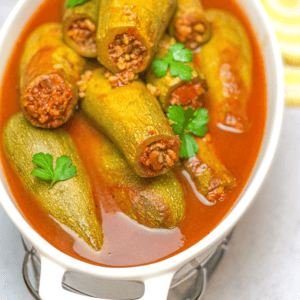
Kousa mahshi is a classic Lebanese and Levantine dish made by hollowing out small squash and stuffing them with a mixture of ground beef, short-grain rice, and warm Middle Eastern spices. The stuffed squash is then slow-cooked in a seasoned tomato broth until the rice is tender, the squash is soft, and the broth thickens into a rich sauce.
The word kousa is the Arabic word for squash or zucchini, and mahshi means stuffed. Together, kousa mahshi is literally stuffed squash and one of the most beloved dishes in Lebanese home cooking.
Kousa mahshi belongs to a broader family of Middle Eastern stuffed vegetables known as mahshi, which includes stuffed grape leaves, stuffed eggplant, stuffed cabbage rolls, and stuffed peppers. Each version uses a similar rice and meat filling, but the vessel changes the texture, flavor, and character of the dish entirely.
In Lebanon and across the Levant, this dish is a sign of hospitality. It is time-consuming to prepare since each squash must be cored by hand, which is exactly why it is made with love for people who matter.
Which Type of Squash Should You Use?
The traditional squash used for kousa mahshi in Lebanese cooking is a small, pale green Middle Eastern zucchini. It is thin-skinned, mild in flavor, and the perfect size for stuffing. In the United States, the closest equivalents are:
Tatuma Squash (Best Choice): Also known as Mexican squash or calabacita, Tatuma squash is round, light green, and mild in flavor. It is the most similar to the Middle Eastern kousa zucchini and holds up beautifully during the long simmer. If you can find it at a Latin grocery store or farmers market, use it.
Regular Zucchini (Most Accessible): Also known as summer squash, standard green zucchini works perfectly well. It is longer and slightly darker than Tatuma squash, but the flavor and texture after cooking are very similar. This is the easiest option to find in any grocery store.
Yellow Squash: It can be used as a substitute. Yellow summer squash has a slightly softer texture but absorbs the broth flavors well.
Chayote Squash (Mirliton): It’s firmer and denser than zucchini. It takes longer to cook through, but some home cooks love the sturdier texture it gives the dish.
Calabaza Squash: It’s very close to zucchini and has a mildly sweet flavor. If using this variety, add a touch more salt to the filling to balance the sweetness.
Tip: Whatever squash you use, look for ones that are similar in size, ideally 4 to 6 inches long, so they cook evenly in the pot.
Ingredients and What They Do
For the Stuffing
Ground beef: Use 80/20 ground beef for the best flavor. The fat keeps the filling moist as it cooks inside the squash. Leaner beef can dry out.
Short-grain white rice: It releases more starch as it cooks, which creates a tender, slightly sticky texture inside the squash. In Lebanon and across the Levant, short or medium-grain rice is the traditional choice for stuffed vegetables.
Seven spice (baharat): This warm Middle Eastern spice blend is the heart of the dish. It typically includes allspice, black pepper, cinnamon, coriander, cumin, cloves, and nutmeg. Do not skip it or substitute with generic allspice.
Citric acid (optional): A small amount of citric acid adds a gentle brightness that lifts the flavor of both the filling and the broth.
Tomato paste: Added both to the filling and the broth. In the filling, it binds moisture and adds a mild umami depth. In the broth, it is the base of the rich tomato sauce.
Olive oil: It brings the filling together and keeps it from drying out once it is cooked inside the squash. Use a good-quality extra virgin olive oil for the best result.
Fresh tomato: It adds natural moisture and a gentle acidity to the stuffing. As the squash cooks, the tomato breaks down inside the filling and releases its juices into the rice, giving it a bright, slightly tangy flavor that balances the richness of the beef and spices.
White onion: It adds sweetness and depth to the stuffing as it slowly cooks inside the squash. It softens completely during the long simmer, melting into the filling without any harsh bite.
Salt: It seasons the beef and rice from the inside out, so every bite of stuffed squash is flavorful all the way through rather than just on the surface.
For the Tomato Broth
Tomato paste and water: The broth is built from tomato paste, water, seven-spice, salt, and bouillon cubes. As the squash cooks for 60 minutes, the broth slowly thickens and absorbs the flavors from the filling inside each squash, creating a deeply savory sauce.
Bouillon cubes: They add body and savoriness to the broth. Chicken or vegetable bouillon both work well.
Substitutions and Variations
Make It Vegetarian: Replace the ground beef with a mixture of finely chopped mushrooms, walnuts, and extra rice. You can also use the same stuffing from a vegetarian grape leaves recipe.
Use Ground Lamb Instead of Beef: Ground lamb is another traditional option in Levantine cooking. It gives the filling a richer, slightly gamier flavor that works beautifully with the seven spice blend.
Add Peppers to the Broth: This is Lama’s mother-in-law’s tip: add a few slices of fresh peppers to the pot before cooking. They melt into the broth and add a subtle sweetness and depth of flavor that you will notice in every bite.
Make It in the Instant Pot: You can pressure cook kousa mahshi on high for 6 minutes. The texture of the squash comes out great. The only difference is that the broth will not thicken the same way it does with the stovetop simmer method, but it is a great option when you are short on time.
Rice Alternatives: While short-grain rice is traditional and strongly recommended, some cooks use medium-grain rice with similar results. Long-grain rice like jasmine or basmati will work but produces a drier, less cohesive filling.
How to Make Lebanese Meat and Rice Stuffed Squash
Step 1: Prepare the Stuffing
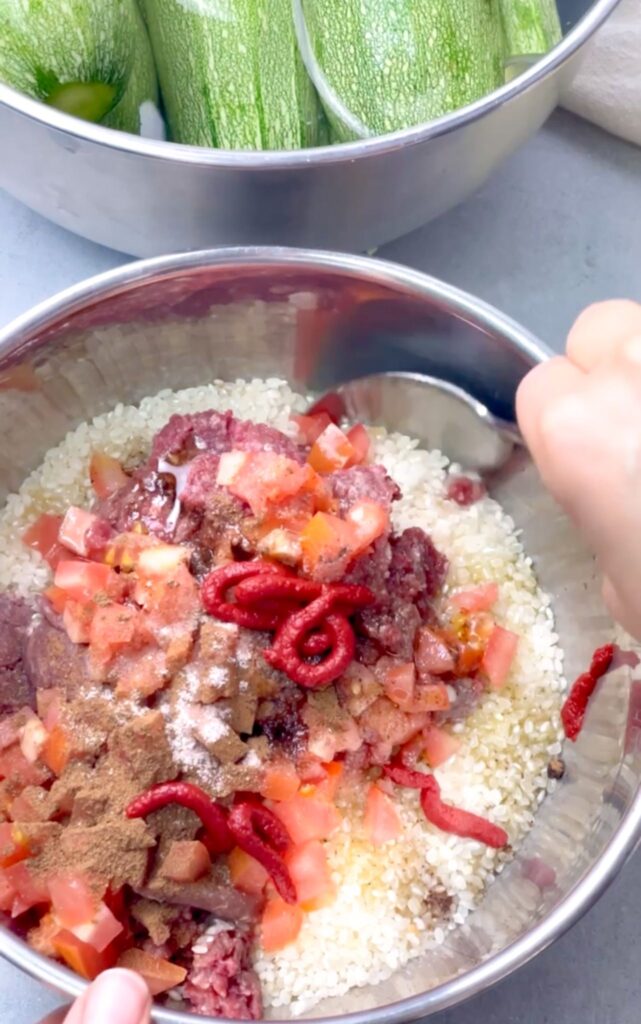
In a medium bowl, combine the ground beef, short-grain rice, finely chopped onion, finely chopped tomato, olive oil, seven spice, salt, tomato paste, and citric acid if using. Mix well until fully combined. Place in the fridge or set aside while you prepare the squash.
Step 2: Core the Squash
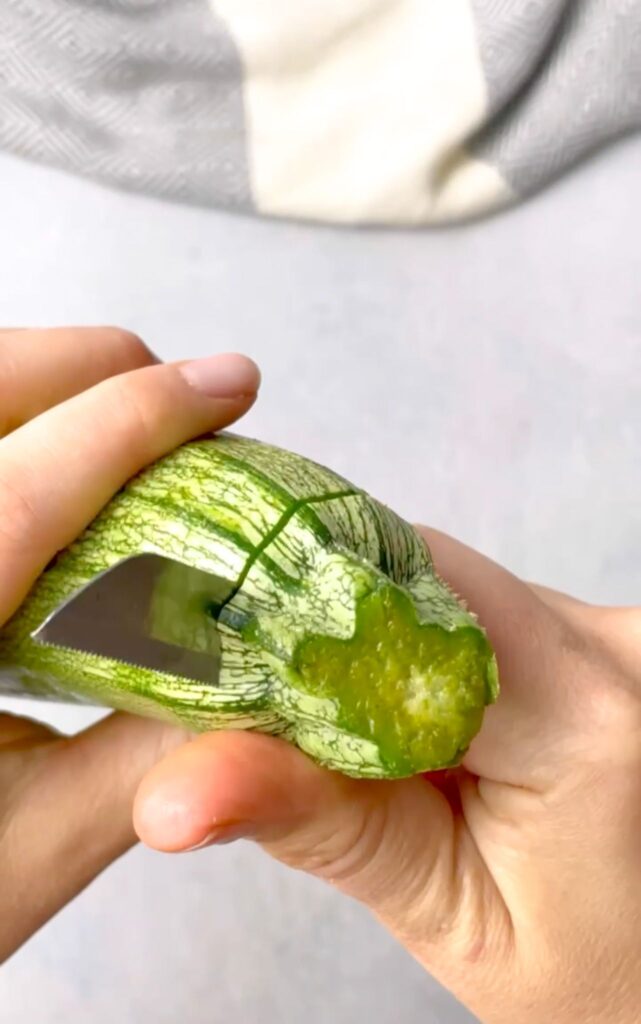
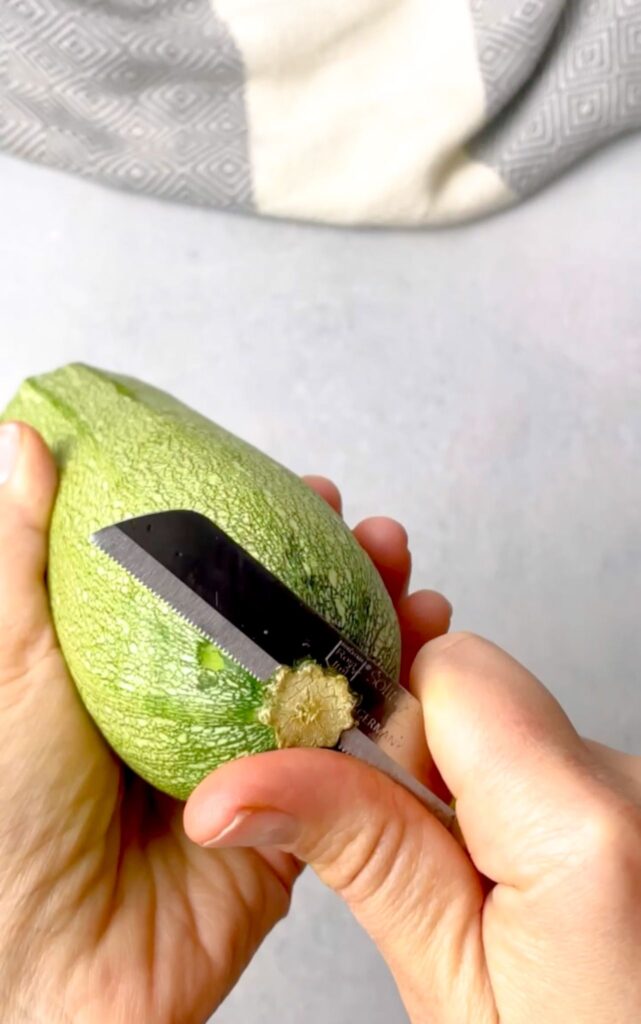
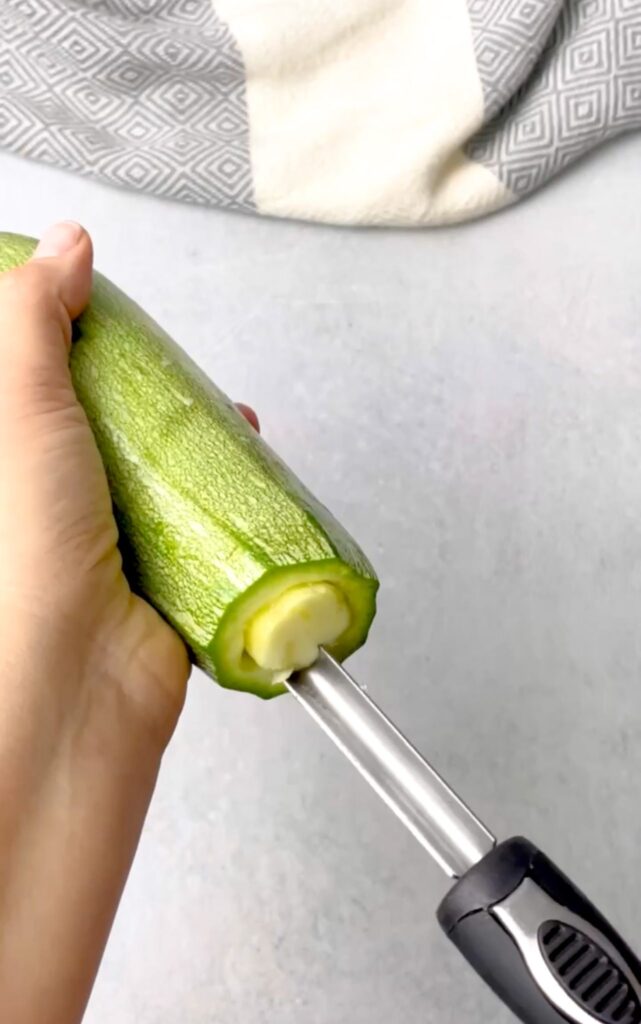
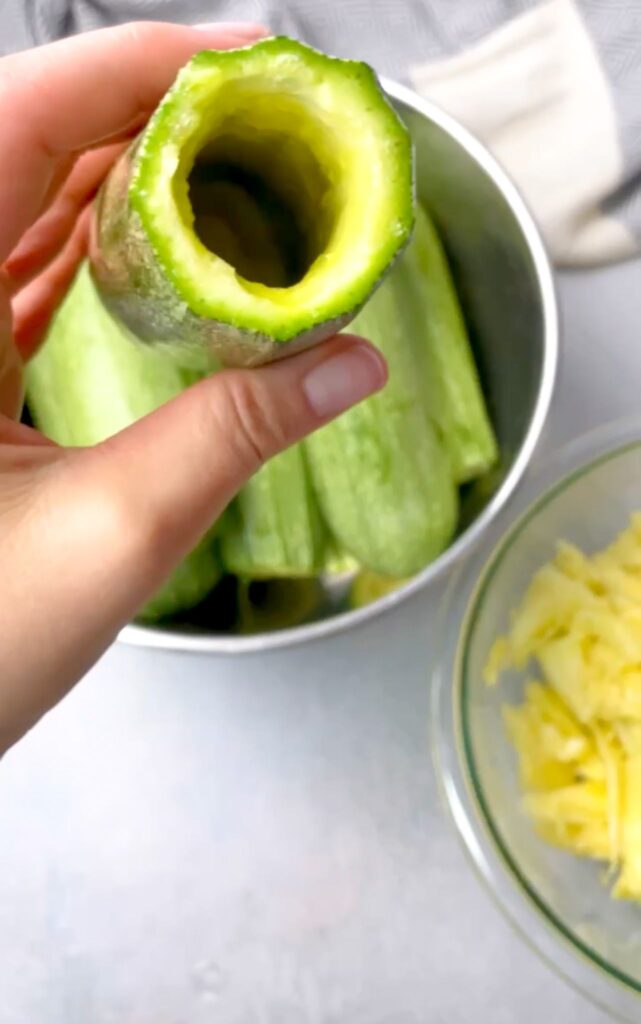
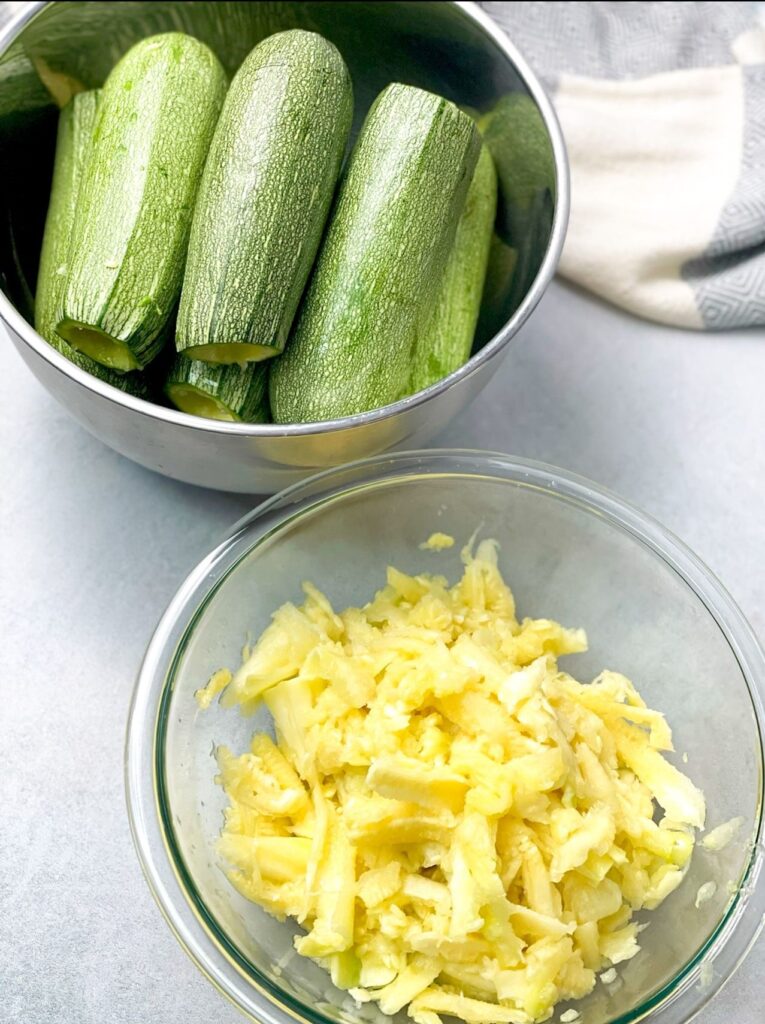
Wash the squash and cut off the stems. Trim the round brown layer on the bottom as well. Using a long squash corer or an apple corer, gently insert it into the squash from the stem end and slowly rotate to carve out the flesh.
Work carefully since the goal is to remove the flesh without piercing the walls of the squash. Set the flesh aside (see the FAQ section for ideas on using it).
Step 3: Stuff the Squash
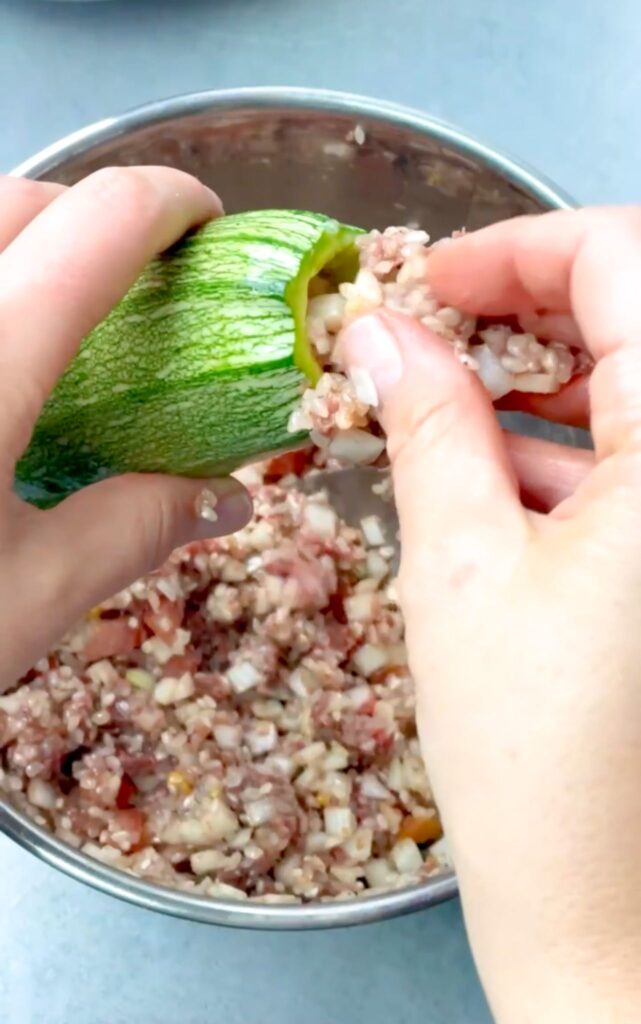
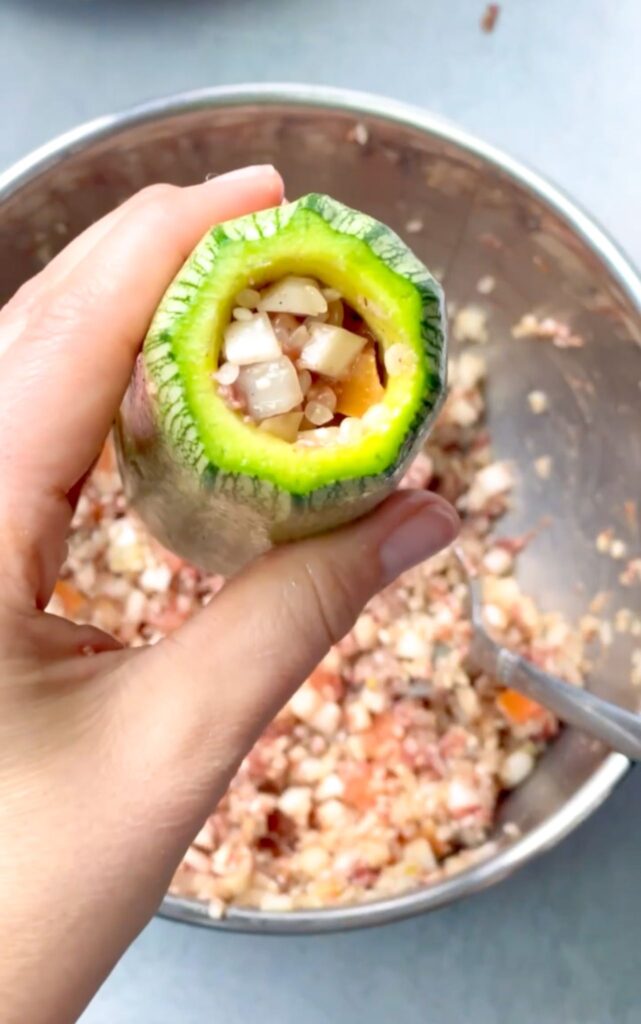
Begin to fill the squash using your fingertips (your pinky finger works best), pushing the filling into each squash. Fill them about three-quarters full and not all the way to the top.
The rice expands as it cooks, and overfilling will cause the squash to split or the filling to become dense. Leave about half an inch of space at the opening.
Step 4: Cook
Arrange the stuffed squash in a large deep pot, stacking them horizontally or slightly tilted upward. Never place them with the open end facing down.
In a small bowl, mix 1 cup of warm water with the ingredients for the broth mix. Pour on top of the squash. Then, add in the remaining 9-10 cups of water.
Bring to a boil, then reduce to medium heat, cover with the lid slightly ajar, and cook for 45 minutes. The broth should thicken noticeably by the end of cooking.
Step 5: Rest and Serve
Once fully cooked, remove the pot from the heat and allow it to rest for 15 minutes. This rest time lets everything settle and makes the squash easier to handle without breaking. Gently transfer the squash to a serving platter and ladle the thick tomato broth over the top.
Recipe Tips
Do not overstuff the squash. The rice expands as it cooks, so fill them about three-quarters full and leave space at the opening. My mom’s secret is stuffing them gently without packing the rice in too tightly.
Short-grain rice is non-negotiable. This is the biggest difference between a good kousa and a great one. Short-grain rice binds the filling and creates the right texture inside the squash.
The spices are everything. Do not underseason. The seven-spice blend and the broth seasoning are what make this dish taste authentic.
Make your broth on the thicker side. You want the tomato broth to coat every bite. If it is too watery, it loses that rich, comforting quality. Simmer with the lid slightly ajar to let it reduce properly.
Add pepper slices to the meat and rice stuffed squash pot. This is my mother-in-law’s tip, and it genuinely enhances the broth. A few slices of fresh pepper quietly transform the flavor.
Master the coring technique slowly. The most common mistake is piercing the squash while coring it. Go gently, rotate the corer, and take your time. It is a skill that gets easier with practice.
Reheat low and slow. When reheating leftovers, place the squash in a small pot with enough broth to cover, bring to a gentle boil, then reduce to low. They will taste just as good as the day you made them.
What to Serve with Kousa Mahshi
In Lebanese tradition, kousa mahshi is almost always served alongside grape leaves. The two dishes are natural companions. A full Lebanese table might include:
- Meat grape leaves or vegetarian grape leaves
- Cucumber-yogurt mint garlic salad: the cool, creamy yogurt is a perfect contrast to the rich tomato broth
- A plate of fresh vegetables: cucumber slices, radishes, and green onions
- Warm pita bread for scooping up every drop of broth
- Creamy hummus as a starter
Dip each bite of stuffed squash into the tomato broth as you eat. That is the whole experience.
Storage and Make Ahead Tips
Refrigerator: Store leftover kousa mahshi in an airtight container with some of the broth for up to 4 days. The broth keeps the squash moist and flavorful.
Freezer: Kousa mahshi freezes well for up to 2 months. Freeze the squash with the broth in a freezer-safe container. Thaw overnight in the refrigerator before reheating.
Reheating: For best results, reheat the meat and rice stuffed squash on the stovetop. Place the squash in a small pot with enough broth to cover the bottom, bring to a gentle boil, then lower to a simmer. If reheating a single serving, a brief microwave session works too, and it still tastes delicious.
Meal Prep: This dish is excellent for meal prep. Make a full batch and portion it out with broth. It reheats beautifully and the flavors actually deepen overnight.
Coring Ahead: You can core the squash 1 to 2 days ahead of time. Soak them in salted water with citric acid, then keep them covered in the fridge. This breaks the prep into two stages and makes the day of cooking much easier.
Frequently Asked Questions
Kousa is a small, pale green Middle Eastern squash, while zucchini is longer and darker. Both work well in this recipe. The Lebanese kousa has thinner skin and a milder flavor, but zucchini is a convenient and widely available substitute.
Cracking is usually caused by overfilling or skipping the pre-soak step. After coring, soak the squash in cold water with a pinch of salt and citric acid for 15 minutes. This firms the walls and prevents splitting. Also, make sure not to pack the filling all the way to the top since the rice expands as it cooks.
Yes! Replace the ground beef with a vegetarian filling. The same stuffing used for vegetarian grape leaves works beautifully. You can also try a filling of finely chopped mushrooms, walnuts, rice, and spices.
One of the most beloved Levantine uses for leftover squash flesh is to fry it with eggs. Season with salt and pepper and cook in a little olive oil. It is a simple, delicious side dish that cooks up in minutes. Try my Zucchini Egg Skillet.
You can, but short-grain rice is strongly recommended. Short-grain rice releases starch as it cooks inside the squash, binding the filling and creating a tender, cohesive texture. Long-grain rice stays more separate and produces a drier result.
Tatuma squash (Mexican squash) is closest to Lebanese kousa and the best option if available. Regular green zucchini is more common and works just as well.
More Delicious Recipes To Try
Lebanese Kousa Mahshi (Meat and Rice Stuffed Squash)
Ingredients
- 12 Tatuma Squash, known as Mexican squash
- ½ pound Ground beef
- 1½ cups Short grain white rice
- ¼ cup Olive oil
- 1 medium Tomato, finely chopped
- 1 medium White onion, finely chopped
- 1 tablespoon Seven spice
- 1½ teaspoons Salt
- ¼ teaspoon Citric acid, optional
- 2 tablespoons Tomato paste
Tomato Broth
- ¾ cup Tomato paste , or 3 (8oz) cans tomato paste
- 1 teaspoon Salt , or to taste
- 1 teaspoon Seven spice
- ¼ teaspoon Citric acid, optional
- 3 Bouillon cubes
- 2½ quarts Water, 10 cups water
Instructions
- In a medium bowl mix the ground beef, rice, onions, tomatoes, olive oil, seven spices, salt, tomato paste and citric acid (optional). Place in the fridge or set aside.
- Wash your squash. Cut the stems off and toss out. cut the round brown layer on the bottom of the squash. Using a long squash corer or an apple corer, gently carve into the squash to remove all the inside flesh.
- Begin to fill the squash using your hands and pushing the mixture with your pinky finger until it has all filled up to the top. Place the squash in a large deep pot, stacking them on top of each other. Horizontally or slightly facing up, as long as they are not facing down.
- To the pot filled with squash add the tomato paste, salt, seven spices, citric acid, and bouillon cubes. Then pour 2 ½ quarts of water (10 cups).
- Bring to a boil then cover the pot with the lid slightly ajar. Place the heat on medium and allow to cook for 60 minutes. The broth should be thickened once they are cooked.
- Once they are fully cooked, allow them to cool for 15 minutes before you gently remove them from the pot. Pour the tomato brother over your kuusa (squash) and enjoy.
Video
Notes
- Do not overstuff the squash. The rice expands as it cooks, so fill them about three-quarters full and leave space at the opening. My mom’s secret is stuffing them gently without packing the rice in too tightly.
- Short-grain rice is non-negotiable. This is the biggest difference between a good kousa and a great one. Short-grain rice binds the filling and creates the right texture inside the squash.
- The spices are everything. Do not underseason. The seven-spice blend and the broth seasoning are what make this dish taste authentic.
- Make your broth on the thicker side. You want the tomato broth to coat every bite. If it is too watery, it loses that rich, comforting quality. Simmer with the lid slightly ajar to let it reduce properly.
- Add pepper slices to the pot. This is my mother-in-law’s tip, and it genuinely enhances the broth. A few slices of fresh pepper quietly transform the flavor.
- Master the coring technique slowly. The most common mistake is piercing the squash while coring it. Go gently, rotate the corer, and take your time. It is a skill that gets easier with practice.
- Reheat low and slow. When reheating leftovers, place the squash in a small pot with enough broth to cover, bring to a gentle boil, then reduce to low. They will taste just as good as the day you made them.


This Meat and Rice Stuffed Squash recipe was delicious! The quantities were perfect. As a first-timer making this dish, I made the mistake of stuffing them too much. After cooking, some of them exploded 😅😅😅. I would recommend any first-timers NOT TO stuff the filling too much! Thanks a lot for sharing!
Hi Rasha! That can definitely happen to the best of us 🙂 Happy you found this recipe helpful!!
I highly recommend you try this recipe!! It’s soooo delish.
Followed the recipe as explained. Clear winner with my family. I plan to make this again!
Amazing! Thank you for leaving your feedback and happy to hear your family enjoyed it 🙂