This post may contain affiliate links. Please read our disclosure policy.
Prep Time: 10 minutes | Cook Time: 20 minutes | Total: 30 minutes | Servings: 4 to 6 | Cuisine: Lebanese / Middle Eastern | Diet: Gluten-Free
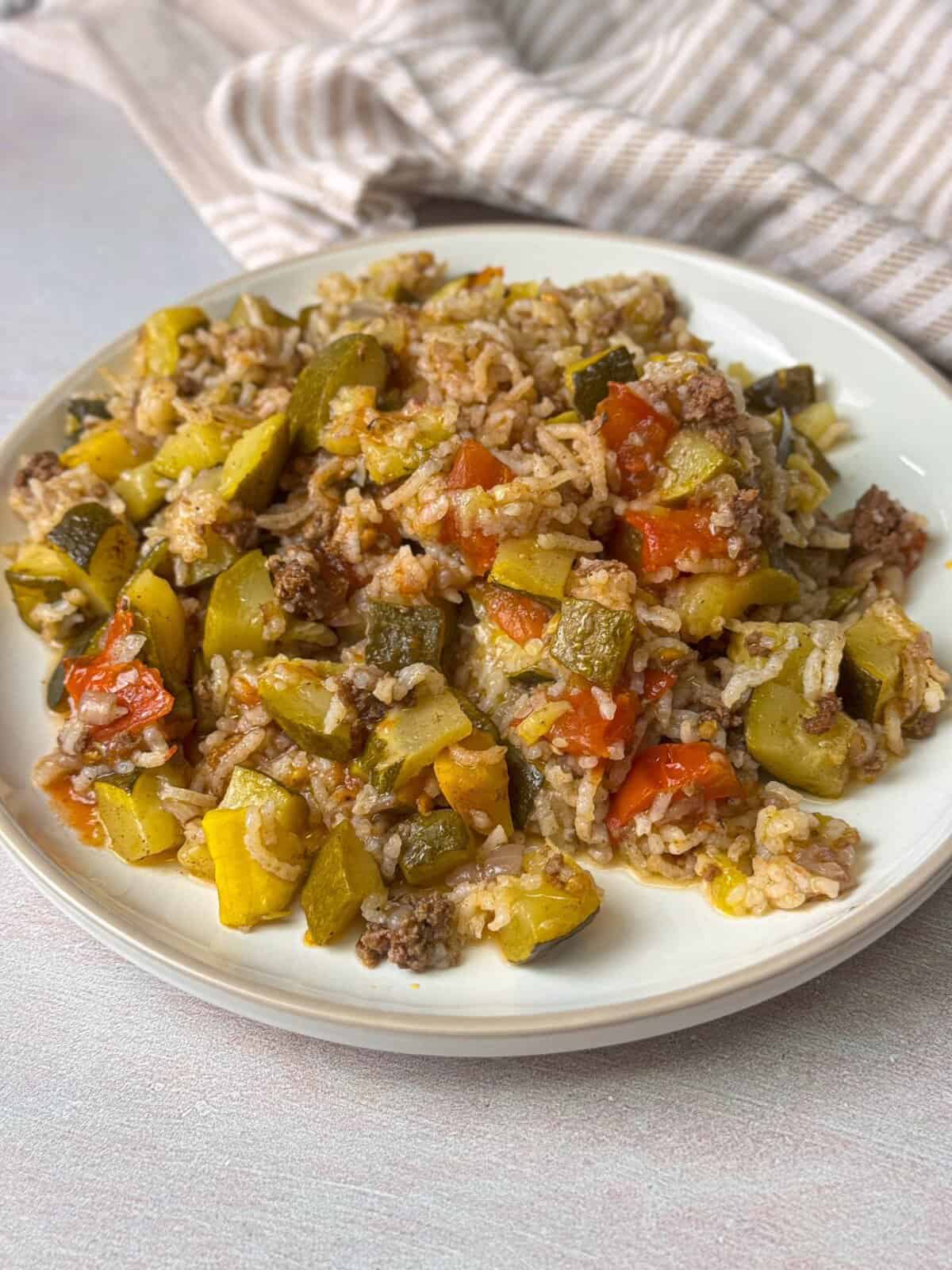
My daughters love kousa mahshi and would happily eat it every week. The only downside is that coring and stuffing squash takes time, making it more of a weekend or special-occasion dish than a quick weeknight meal.
So one busy weeknight, when my daughters were craving kousa mahshi, and I had squash in the fridge, but not a spare hour to core anything, I made a decision. I cut everything into cubes and tossed it all into one pot: the squash, the rice, the ground beef, the seven-spice, the onion, and the broth. I cooked it all together as a pilaf and made a quick red sauce to pour over it at the table.
The result genuinely surprised me. It tasted like kousa mahshi. The same warmth, the same spices, the same satisfying heartiness, all on the table in about 30 minutes. My husband, who always prefers the traditional stuffed version, was fully on board. And my daughters? They were happy, which was the whole point.
I want to be honest about what this dish is and is not. The flavor is five stars. I would not hesitate to say that. The presentation is casual. This is a weekday dish, a meal prep hero, something I make when the kids are craving kousa, and I need it on the table in half an hour. I would not serve it at a dinner party, but for a casual family dinner or a week of packed lunches, it is absolutely outstanding. You will also love trying Kousa Cores (Middle Eastern Cooked Squash Filling) and Lentil and Squash Vegan Soup Recipe.
Table of Contents
- Why You’ll Love This Recipe
- What is Unstuffed Kousa Mahshi?
- Ingredients and What They Do
- Substitutions and Variations
- How to Make Unstuffed Kousa Mahshi
- Recipe Tips
- What to Serve with Unstuffed Kousa Mahshi
- Storage and Reheating
- Frequently Asked Questions
- More Recipes You Must Try:
- Unstuffed Kousa Mahshi (Easy Lebanese Squash and Rice Pilaf) Recipe
Why You’ll Love This Recipe
- Same flavors as traditional kousa mahshi in about 30 minutes
- One pot from start to finish with minimal cleanup
- No coring, no stuffing, no special tools required
- Naturally gluten-free and easy to adapt for different diets
- Perfect weeknight dinner or meal prep dish for the whole week
- The red sauce poured over the dish at the table takes it to another level
- Beginner-friendly and genuinely hard to mess up
What is Unstuffed Kousa Mahshi?
Unstuffed kousa mahshi is a deconstructed version of kousa mahshi, one of the most beloved dishes in Lebanese and Levantine cooking.
In the traditional version, small squash are individually cored by hand and stuffed with a seasoned ground beef and rice mixture, then simmered in a tomato broth for up to an hour. Unstuffed kousa mahshi keeps every ingredient from the original but eliminates the coring and stuffing process entirely. The squash is simply cubed and cooked together with the rice, beef, and spices in one pot as a pilaf.
The word kousa is Arabic for squash or zucchini. Mahshi means stuffed. So kousa mahshi literally means stuffed squash. This recipe takes that same flavor combination and reimagines it as a practical one-pot rice dish, much like unstuffed cabbage or deconstructed grape leaves: all the taste of a cherished traditional recipe with a fraction of the effort.
What makes this version distinct is that the squash cooks directly inside the pilaf rather than as a vessel around it. As the rice absorbs the seasoned broth, the squash softens and releases its moisture into the pot, and every grain of rice ends up infused with that unmistakably Lebanese flavor.
Finished with a simple tomato red sauce poured over the top, it delivers everything you love about kousa mahshi in a way that fits into a real weeknight schedule.

Ingredients and What They Do
For the Kousa Pilaf
Squash (yellow or green zucchini): The star of the dish. As the cubed squash cooks with the rice, it releases moisture into the pot and absorbs the spiced broth, becoming tender and deeply flavorful. Cut it into large cubes so it holds its shape and does not turn mushy.
Rice: The base of the pilaf. Long-grain rice like basmati produces a lighter result where each grain stays distinct. Short-grain rice releases more starch as it cooks, creating a slightly creamier, more cohesive texture. Both work well.
Ground beef: Adds richness, protein, and savory depth. Use 80/20 ground beef for the best flavor since the fat carries the spices through the dish.
Onion: It forms the aromatic foundation of the entire dish. As it softens, it becomes sweet and releases its juices into the oil, infusing the base with flavor before anything else is added.
Tomato (optional): It adds natural moisture and a gentle acidity that brightens the overall flavor.
Olive oil: Use extra-virgin olive oil, which adds a subtle richness that is characteristic of Lebanese home cooking.
Seven spice (baharat): This is the soul of the recipe and what makes it taste like kousa mahshi rather than a generic rice dish. It is the same spice blend used in the traditional stuffed version.
Salt: Season generously and taste as you go. Because the rice absorbs all the liquid in the pot, the seasoning you add before cooking is what carries through to every bite.
Bouillon cube: Adds body and savory depth to the cooking liquid that plain water cannot provide on its own. Chicken or vegetable bouillon both work.
Lemon juice or citric acid (optional): A small amount balances the spices and adds a subtle brightness.
For the Red Sauce
Tomato paste: The base of the red sauce that gets poured over the finished pilaf at the table. It creates a rich, concentrated, slightly tangy flavor that is deeply savory and pairs perfectly with the spiced rice and squash below it.
Water: Thins the tomato paste to a pourable consistency that coats the rice generously without making it watery.
Seven-spice and salt: Season the red sauce to taste so it complements and enhances the pilaf. It should taste bold and well-seasoned since it is the finishing element of the entire dish.
Learn more about the difference between yellow squash and zucchini here.

Substitutions and Variations
Make It Vegetarian: Leave out the ground beef entirely. The squash, rice, and spices are hearty enough to carry the dish. Add a can of drained chickpeas for extra protein and texture if you like.
Swap the Protein: Ground lamb is a traditional Levantine alternative that gives the pilaf a richer, slightly more complex flavor. Ground turkey or chicken works well for a lighter version.
Try Different Squash: Green zucchini, yellow squash, and Tatuma squash (Mexican squash, the closest variety to traditional Lebanese kousa) all work beautifully in this recipe. A mix of green and yellow adds a nice visual variety to the finished dish. Avoid very large zucchini as they tend to be watery and more prone to bitterness.
Grain Variations: Quinoa, bulgur, or couscous can replace the rice for a different texture. Keep in mind that each grain has its own water ratio and cooking time, so adjust accordingly.
Add Heat: For a spicier version, add a pinch of red pepper flakes or a finely diced chili when sautéing the onion.
Add Toasted Nuts: Scatter toasted pine nuts or slivered almonds over the finished pilaf for a pleasant crunch and nutty richness that pairs beautifully with the spiced rice.
How to Make Unstuffed Kousa Mahshi
Step 1: Soak the Rice
Wash the rice under cold water until the water runs mostly clear, then soak it for 10 to 15 minutes and drain. This removes excess starch and helps the grains cook evenly without clumping.
Step 2: Build the Aromatic Base
In a large pot over high heat, add 4 tablespoons of olive oil and the diced onion. Sauté for 3 to 4 minutes until soft and translucent. If using fresh tomato, add the cubed tomato now and cook for another 2 minutes.
Step 3: Brown the Beef
Add the ground beef and cook for about 7 minutes, breaking it apart with a wooden spoon as it browns. Make sure it is fully cooked and any liquid has evaporated before moving on.
Step 4: Add the Squash and Rice
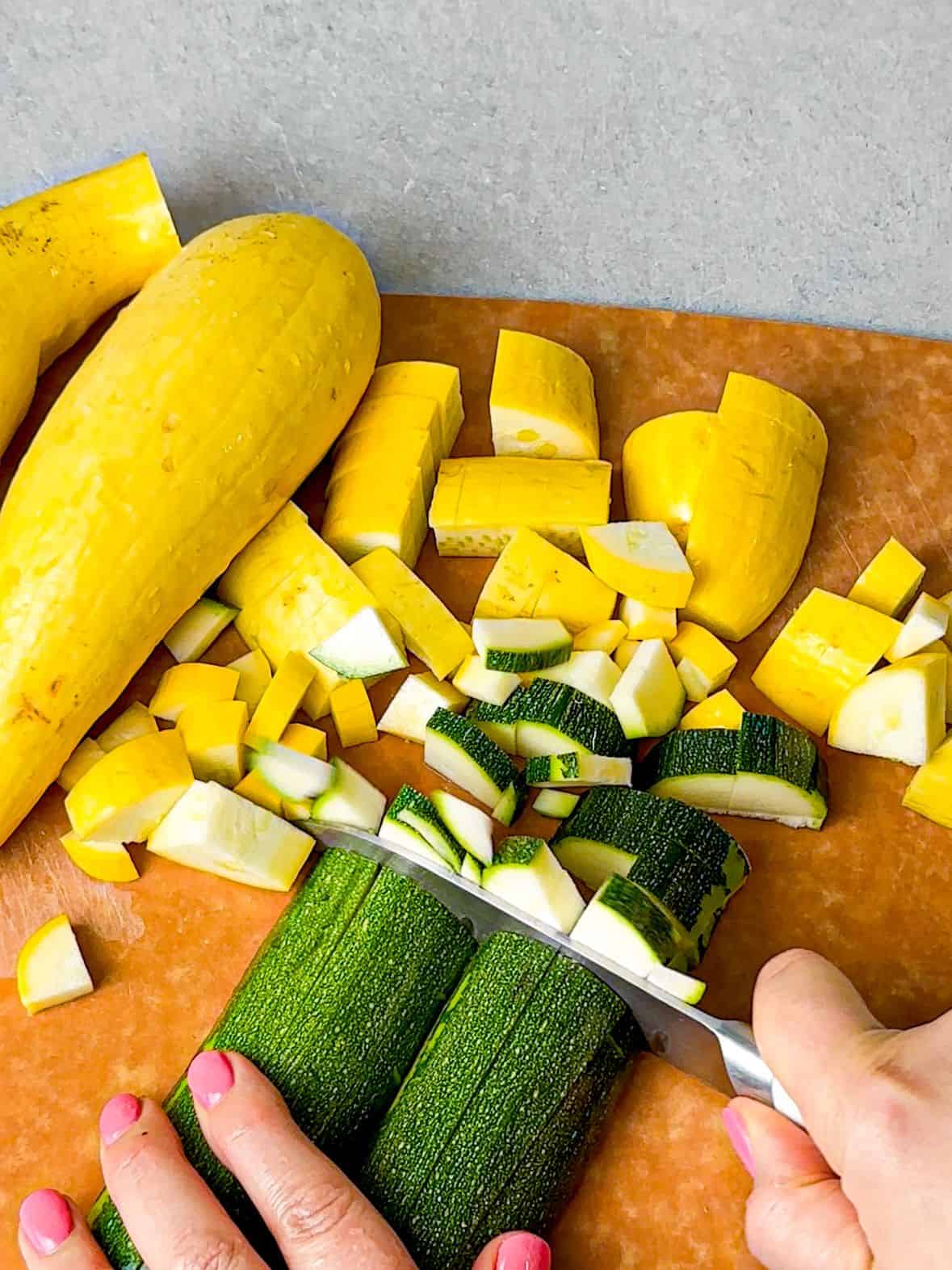
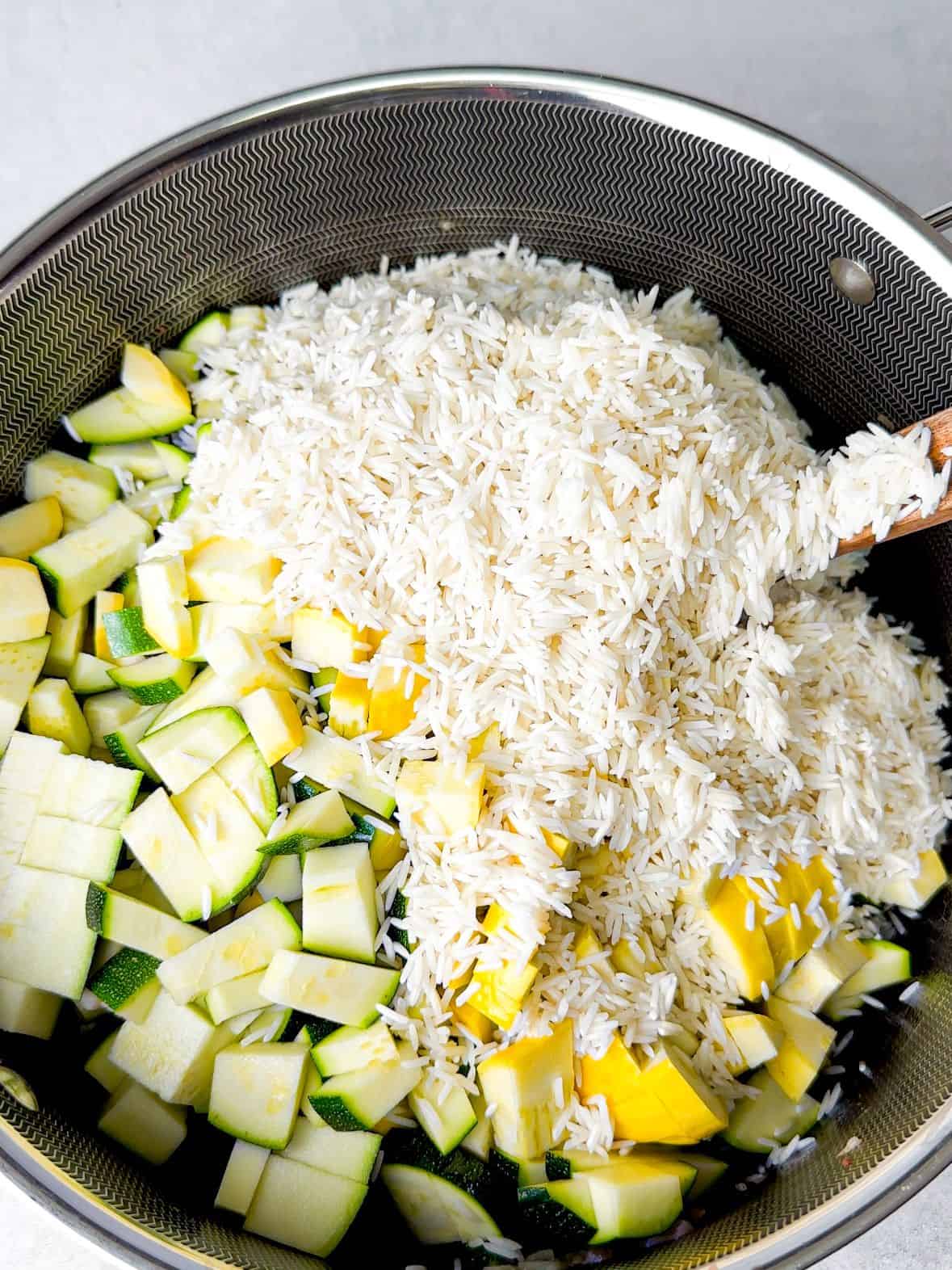
Wash the squash, remove the stems, and cut into large cubes. No coring needed. I used both yellow and green squash. Add the squash to the pot along with the drained rice, remaining 4 tablespoons of olive oil, bouillon cube, seven spice, and salt. If using lemon juice or citric acid, add it now. Stir so everything is coated in the seasoned oil.
Step 5: Add Water and Taste
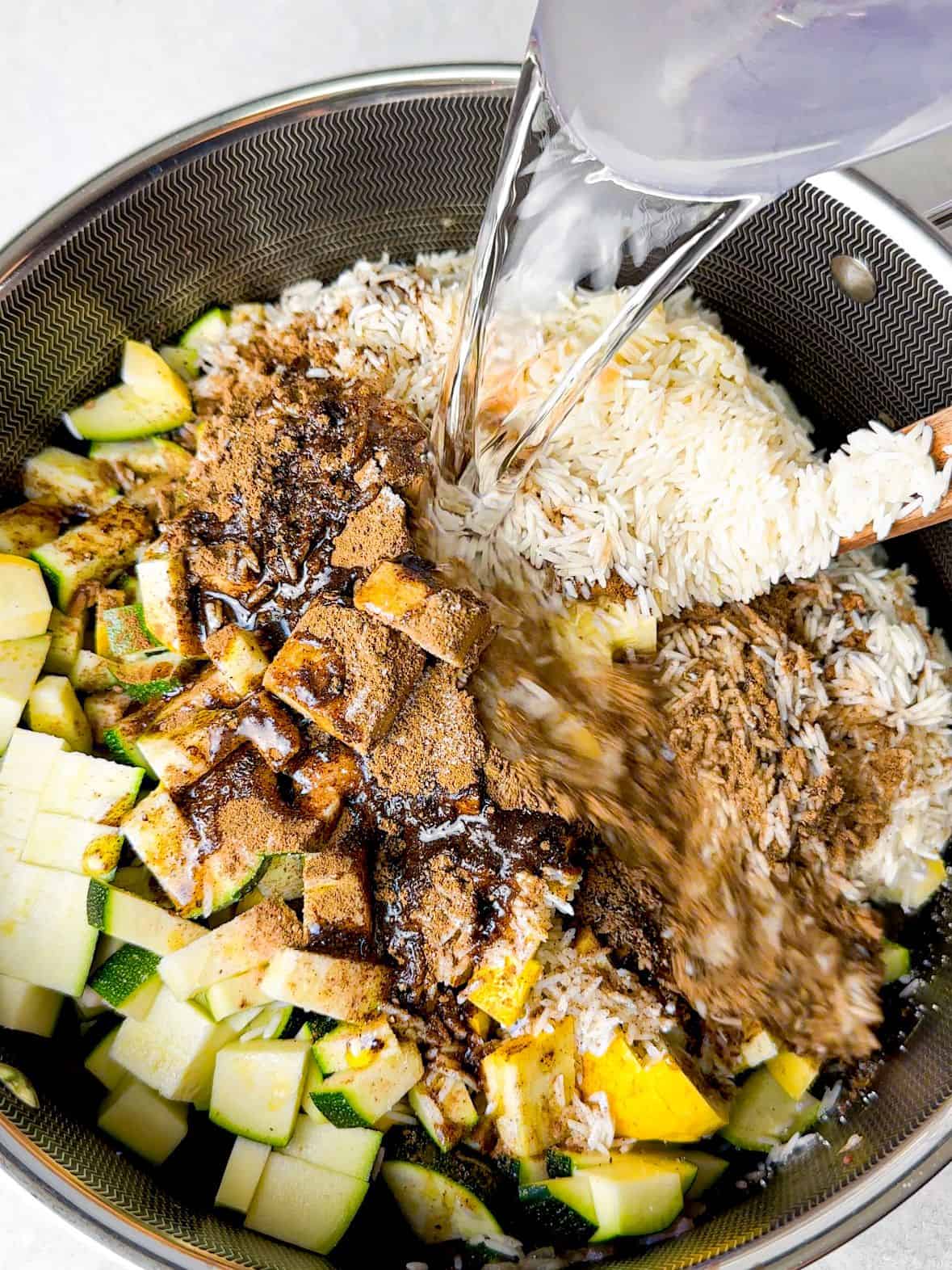
Pour in 2 cups of water. Raise the heat to high and stir gently so everything is evenly combined. Taste the liquid now and adjust the salt and seasoning if needed.
Step 6: Cover and Simmer
Once the water comes to a full boil for one minute, reduce the heat to low, cover the pot, and simmer for 15 to 20 minutes until the rice is fully cooked and the liquid is absorbed.
Step 7: Make the Red Sauce
While the pilaf simmers, combine the water, tomato paste, seven spice, and salt in a small saucepan. Bring to a boil, stir until the tomato paste is fully dissolved, then lower the heat and simmer for 15 minutes until slightly thickened.
Step 8: Serve
Fluff the rice gently with a fork and transfer to a serving plate or dish. Ladle the red sauce over the top at the table so each person can pour as much as they like. Serve warm.


Recipe Tips
Always taste a piece of raw squash before cooking. If it is bitter, do not use it. A bitter zucchini will ruin the entire pot, and there is nothing you can do once it is cooked in. This is the one step I never skip.
Do not core the squash. That is the whole shortcut. Just wash it, cut the stem, cube it, and add it straight to the pot. Coring is only for the traditional stuffed version.
Taste the broth before you cover the pot. Once the lid goes on and the rice starts absorbing the liquid, you cannot adjust the seasoning anymore. Make sure it tastes well seasoned before you lower the heat.
Do not overthink the squash variety. Green zucchini, yellow squash, or Tatuma squash: they all come out delicious as long as they are not bitter. Use whatever looks freshest.
The red sauce is not optional in my house. Pour it over the pilaf when you serve it. That combination of spiced rice and tangy tomato sauce is exactly what makes this taste like the real kousa mahshi.
This is a weekday dish, not a dinner party dish. The flavor is genuinely five stars. The presentation is casual. Serve it to people you are comfortable with, and they will ask for seconds.
Make a full batch for meal prep. This reheats all week beautifully. Store portions with a little of the red sauce and warm them up as needed.
What to Serve with Unstuffed Kousa Mahshi
This is a hearty, filling dish that works perfectly well on its own, especially with the red sauce. On days when you want to build out a fuller table:
- A plate of Vegetarian Grape Leaves is a natural companion, just like with traditional kousa mahshi
- Fattoush Salad is the crisp, lemony salad that cuts through the richness of the pilaf perfectly
- Cucumber-Yogurt Mint Garlic Salad as the cool yogurt is a wonderful contrast to the warm spices
- A simple plate of sliced cucumber, radishes, and green onions on the side
- Warm pita bread for scooping
Storage and Reheating
Refrigerator: Transfer leftover unstuffed kousa mahshi to an airtight container and store in the fridge for up to 4 days. Keep the red sauce in a separate container. The flavors deepen overnight and leftovers taste genuinely delicious the next day.
Freezer: This dish freezes well for up to 2 to 3 months. Store portions in freezer-safe containers. Thaw overnight in the refrigerator before reheating.
Reheating: Reheat on the stovetop over low to medium heat with a small splash of water to prevent the rice from drying out. Stir gently as it warms.
You can also reheat in the microwave with a damp paper towel over the top to keep it moist. Warm the red sauce separately and pour it fresh over the top.
Meal Prep: This is one of the best meal prep recipes in Lebanese home cooking. Make a full batch, divide into portions with red sauce on the side, and you have satisfying lunches or dinners ready for the whole week. The flavor genuinely holds up over several days.
Frequently Asked Questions
Traditional kousa mahshi requires coring, stuffing, and simmering whole squash for about an hour. The unstuffed version skips that using cubed squash cooked with rice and beef in one pot. Same flavors, much faster (about 30 minutes).
Green zucchini, yellow squash, or Tatuma (closest to Lebanese kousa) all work well. Just make sure the squash isn’t bitter. Taste a small piece before cooking.
No. That is the entire point of this recipe. Wash the squash, cut off the stem, and cube it. No coring, no special tools, and no extra time needed.
Yes, simply leave out the ground beef. The squash, rice, and spice combination is flavorful and filling on its own. Adding a can of drained chickpeas gives you extra protein and texture.
This usually means the heat was too high or the lid was not on tightly. Keep it at a low simmer with a tight lid. If the rice seems to be drying out before it is fully cooked, add a small splash of water, cover again, and continue cooking on low.
Yes. Quinoa, bulgur, or couscous can all be substituted. Each grain has a different water ratio and cooking time, so adjust accordingly. Rice is the traditional choice and delivers the most authentic kousa mahshi flavor.
More Recipes You Must Try:
Main Dish
Unstuffed Cabbage-Malfoof
Middle Eastern Recipes
Vegetarian Grape Leaves (Instant Pot)
Healthy Recipes
Flavorful Garlic Butter Rice

Unstuffed Kousa Mahshi (Easy Lebanese Squash and Rice Pilaf)
Ingredients
Squash Pilaf Ingredients
- 1½ cups Long grain or short grain rice
- 4 tablespoons Extra-virgin olive oil, + 4 tablespoons extra virgin olive oil
- 1 pound Ground beef
- 1 Medium onion, diced
- 1 tomato, cubed
- 2 cups Water
- 6 Medium/large squash, yellow or green, largely cubed
- ¾ tablespoons Salt
- 1 tablespoon Seven spices
- 1 Bouillon cube
Red Sauce Broth Ingredients
- 3 cups Water
- ¼ teaspoon Seven Spices, to taste
- ¼ teaspoon Salt, to taste
- ½ cup Tomato Paste
Instructions
To Prepare the Unstuffed Koussa
- Wash and soak your rice, set aside.
- In a large pot on high heat, add 4 tablespoons olive oil, add the cubed onion, and sauté for a few minutes. Then add the cubed tomatoes.
- Add the ground beef to cook for another 7 minutes while breaking the meat apart using your wooden spoon.
- Now wash the squash, remove the stem and cube the preferred squash (I used both yellow and green) that you want to use and add to the pot, followed by the drained rice, bullion cube, 4 tablespoons olive oil, seven spices and salt. You can add a squeeze of lemon or a pinch of citric acid to balance the flavors.
- Now add the water. Place on high heat and gently mix together so that all the ingredients are welcome combined.
- Once the water has come to a boil for a whole minute, cover the pot and lower the heat to simmer for 15-20 minutes.
- Enjoy with the red sauce.
To Prepare the Red Sauce Broth
- In a medium saucepan add the water, tomato paste, seven spices and salt.
- Bring to a boil, mix well until the tomato paste has dissolved and ingredients are well combined.
- Lower heat to simmer for 15 minutes until broth has slightly thickened.
- Pour the desired amount over the cooked rice and squash. Enjoy warm.
Notes
- Always taste a piece of raw squash before cooking. If it is bitter, do not use it. A bitter zucchini will ruin the entire pot, and there is nothing you can do once it is cooked in. This is the one step I never skip.
- Do not core the squash. That is the whole shortcut. Just wash it, cut the stem, cube it, and add it straight to the pot. Coring is only for the traditional stuffed version.
- Taste the broth before you cover the pot. Once the lid goes on and the rice starts absorbing the liquid, you cannot adjust the seasoning anymore. Make sure it tastes well seasoned before you lower the heat.
- Do not overthink the squash variety. Green zucchini, yellow squash, or Tatuma squash: they all come out delicious as long as they are not bitter. Use whatever looks freshest.
- The red sauce is not optional in my house. Pour it over the pilaf when you serve it. That combination of spiced rice and tangy tomato sauce is exactly what makes this taste like the real kousa mahshi.
- This is a weekday dish, not a dinner party dish. The flavor is genuinely five stars. The presentation is casual. Serve it to people you are comfortable with, and they will ask for seconds.
- Make a full batch for meal prep. This reheats all week beautifully. Store portions with a little of the red sauce and warm them up as needed.