This post may contain affiliate links. Please read our disclosure policy.
Watermelon is the ultimate summer fruit; it’s refreshing, hydrating, and always a hit at picnics or parties. But cutting those giant wedges can be more hassle than fun. The good news? There’s a simple trick to cut the watermelon into easy-to-grab sticks that kids love and adults secretly prefer too.
This method keeps things neat, bite-sized, and perfect for pool days, barbecues, or just a refreshing snack at home. They’re simple to prepare, kid-friendly, and perfect for serving at gatherings.
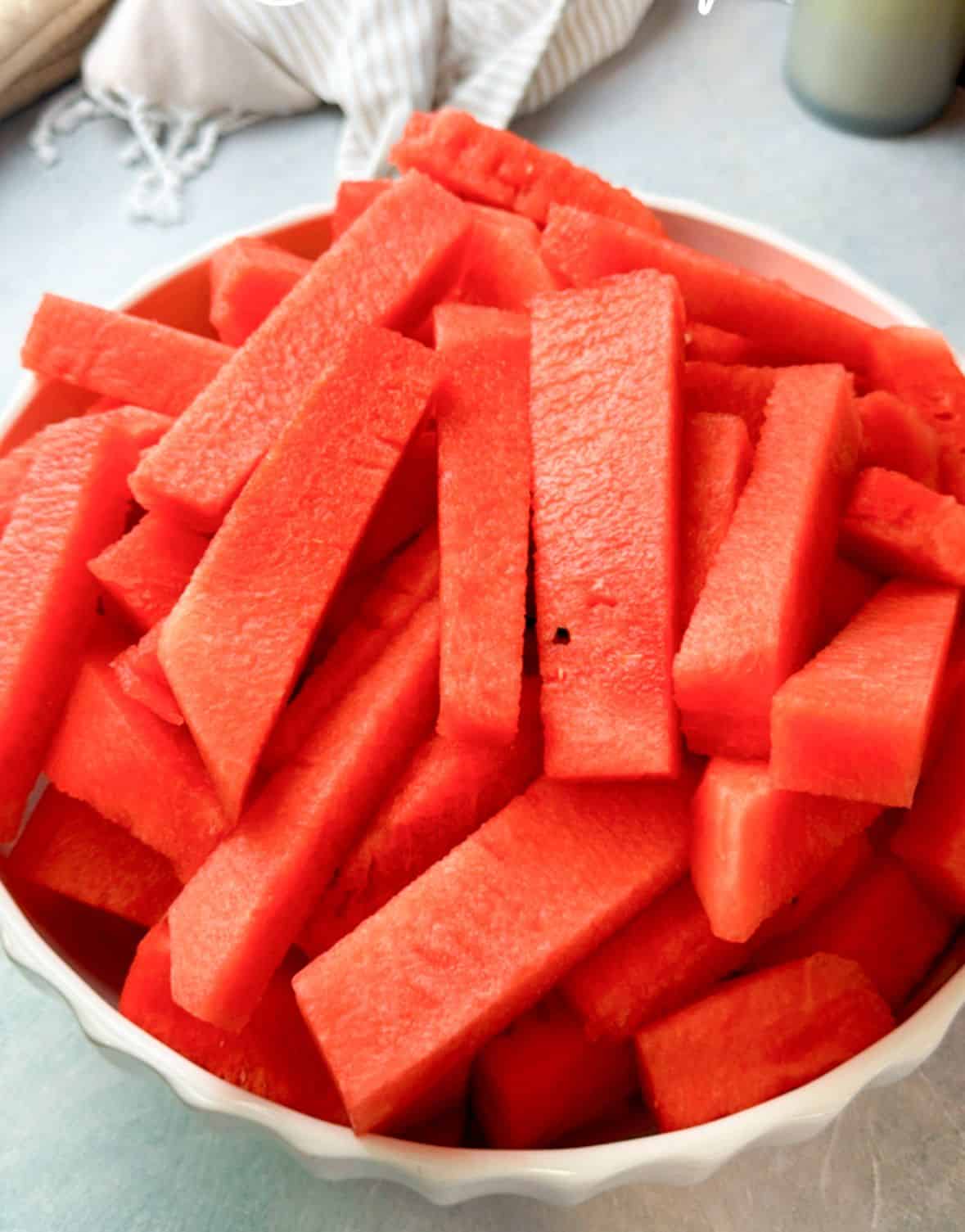
Watermelon sticks are not only practical, but they also look fantastic on a platter. With just a few quick cuts, you’ll have perfectly portioned pieces that are as fun to eat as they are beautiful to serve. It’s a small hack that makes a big impact. You will love to use this method when making Watermelon Burrata Salad, a tangy, sweet, light summer salad.
How to Pick a Ripe Watermelon
We all strive to choose ripe watermelons from the market. So, here’s how to choose the best watermelon for cutting:
Field Spot: Find a watermelon with a yellowish, creamy spot where it rested on the ground. The darker and more golden the spot, the riper it is. Avoid ones with a white or very light spot, they’re usually unripe.
Color and Skin: A ripe watermelon has a deep, consistent green color with a dull, not shiny finish. Shiny skin often means it’s unripe.
Weight: Pick the watermelon up; it should feel heavy for its size. Watermelons are mostly water, so a ripe one will feel heavier than you expect for how big it looks.
Tap Test: Give it a firm tap with your knuckles. A ripe watermelon will sound deep and hollow, while an unripe one will sound dull or flat.
Webbing (Brown Lines): Brown, vein-like webbing or sugar spots are good signs. It means that bees pollinated the flower, and the fruit is likely sweet.
Stem: Look at the stem if attached. A dry, brown stem means the watermelon ripened on the vine. However, a green stem can indicate it was picked too early.
Tools to Cut Watermelon
You don’t need fancy equipment! With just a few kitchen basics, you will have uniform, juicy watermelon sticks:
Large sharp knife: essential for clean, even cuts.
Cutting board: a sturdy, non-slip one works best.
How to Cut a Watermelon into Perfect Sticks
1. Trim the Ends
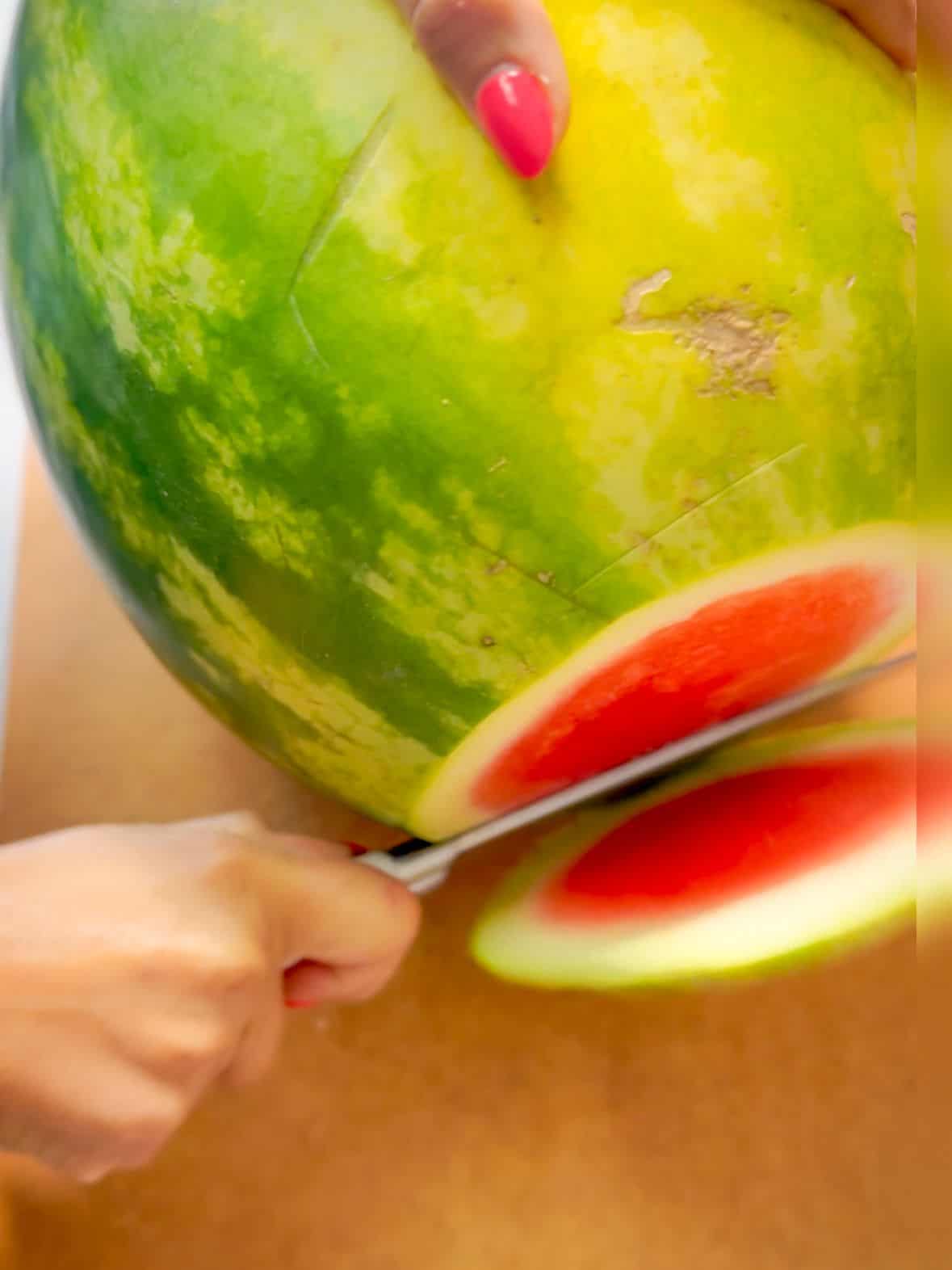
Place the washed watermelon on a large cutting board, then slice off both ends (the top and bottom) to create flat surfaces.
2. Remove the Rind
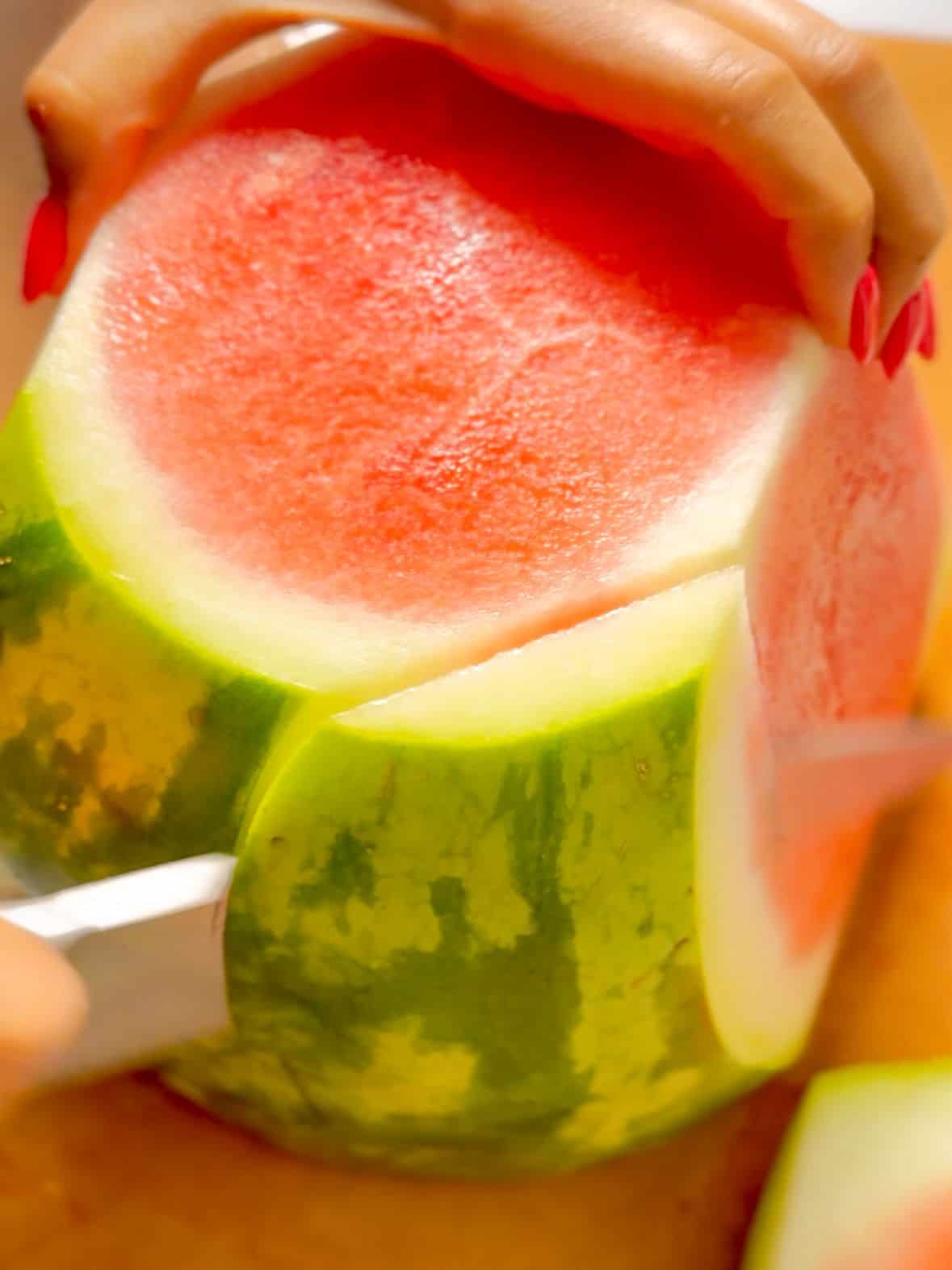
Start from the top and carefully slice downward following the curve of the fruit to remove the rind and the white flesh beneath it. Rotate the watermelon as you go until all the rind is removed.
3. Halve the Watermelon
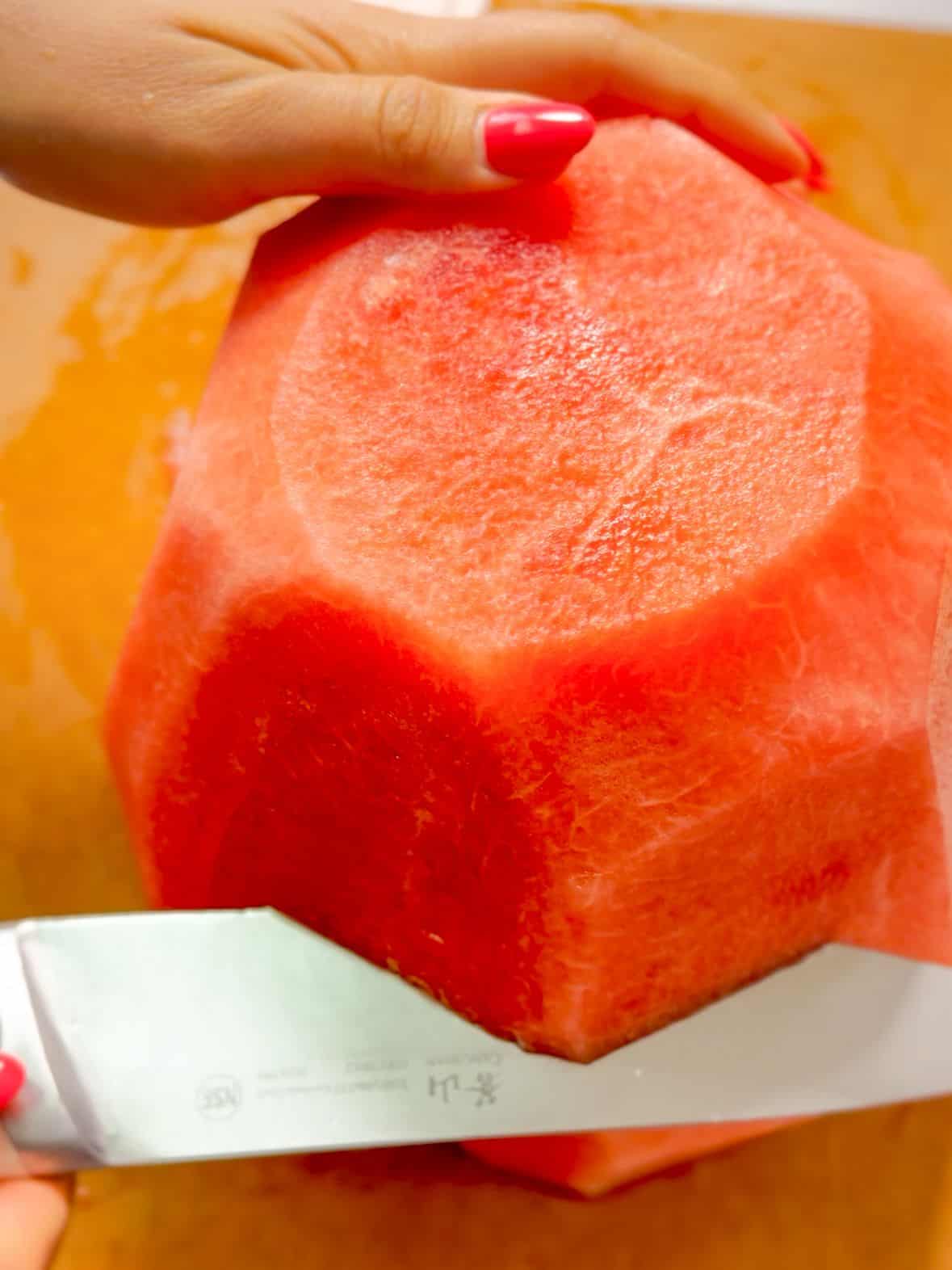
Stand the watermelon upright on one of the flat ends. Cut it straight down the middle to create two large halves.
4. Slice Vertically
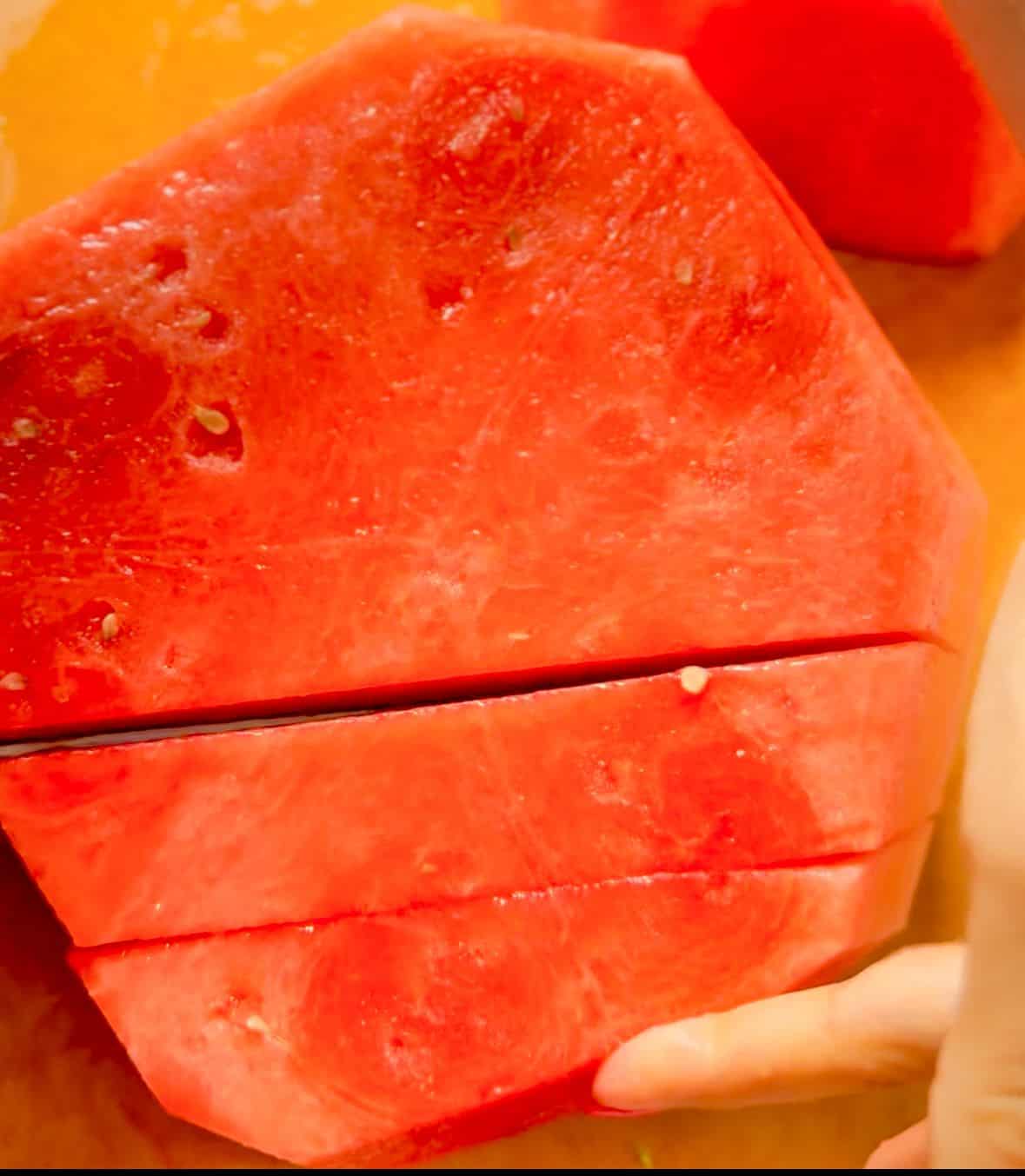
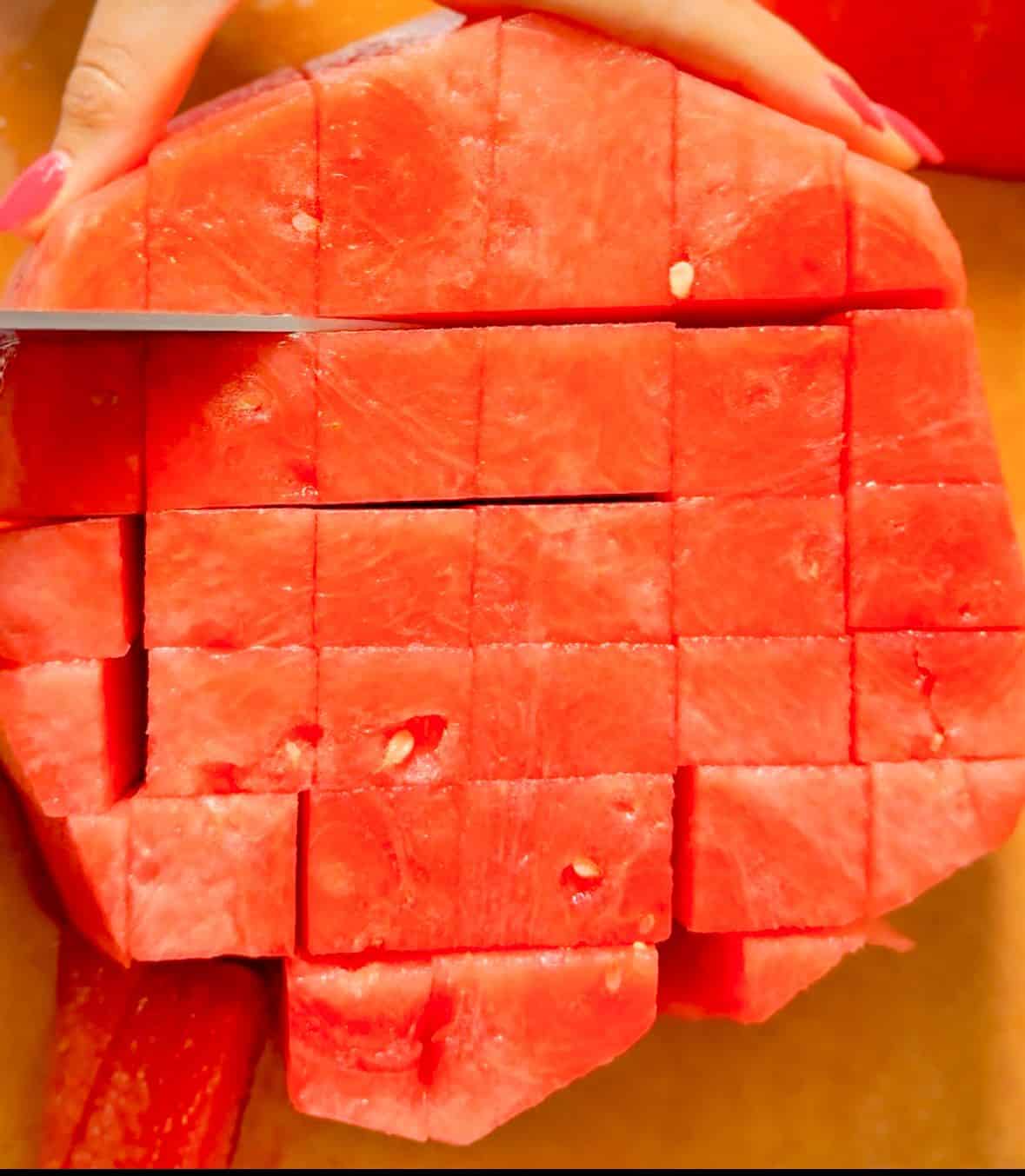
With the watermelon half still flat on the board, cut it into even slices about ½ inch thick.
5. Rotate and Slice Again
Turn the watermelon 90 degrees. Slice again, this time about 1 inch apart, to create long stick-like pieces.
6. Serve and Enjoy
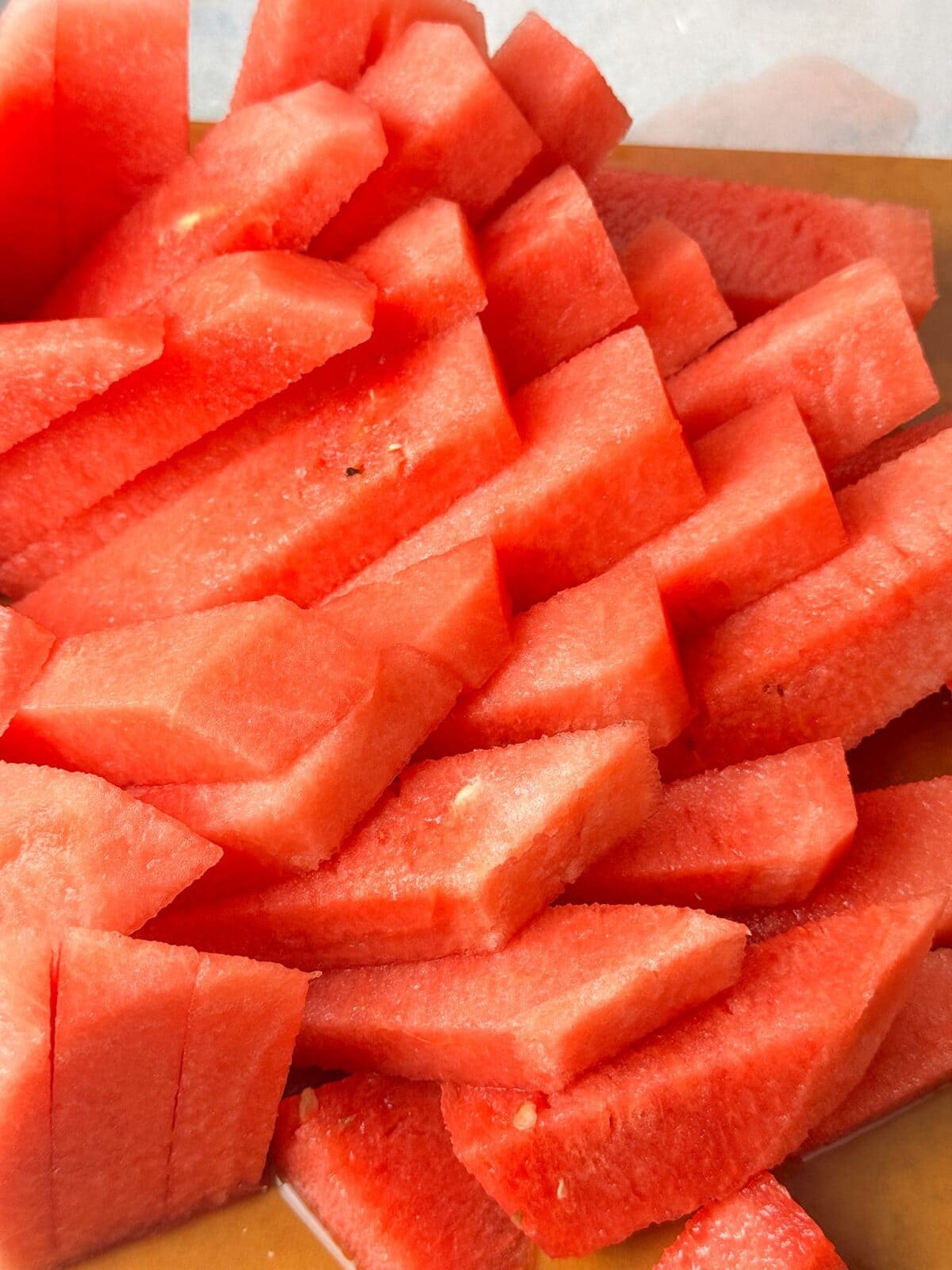
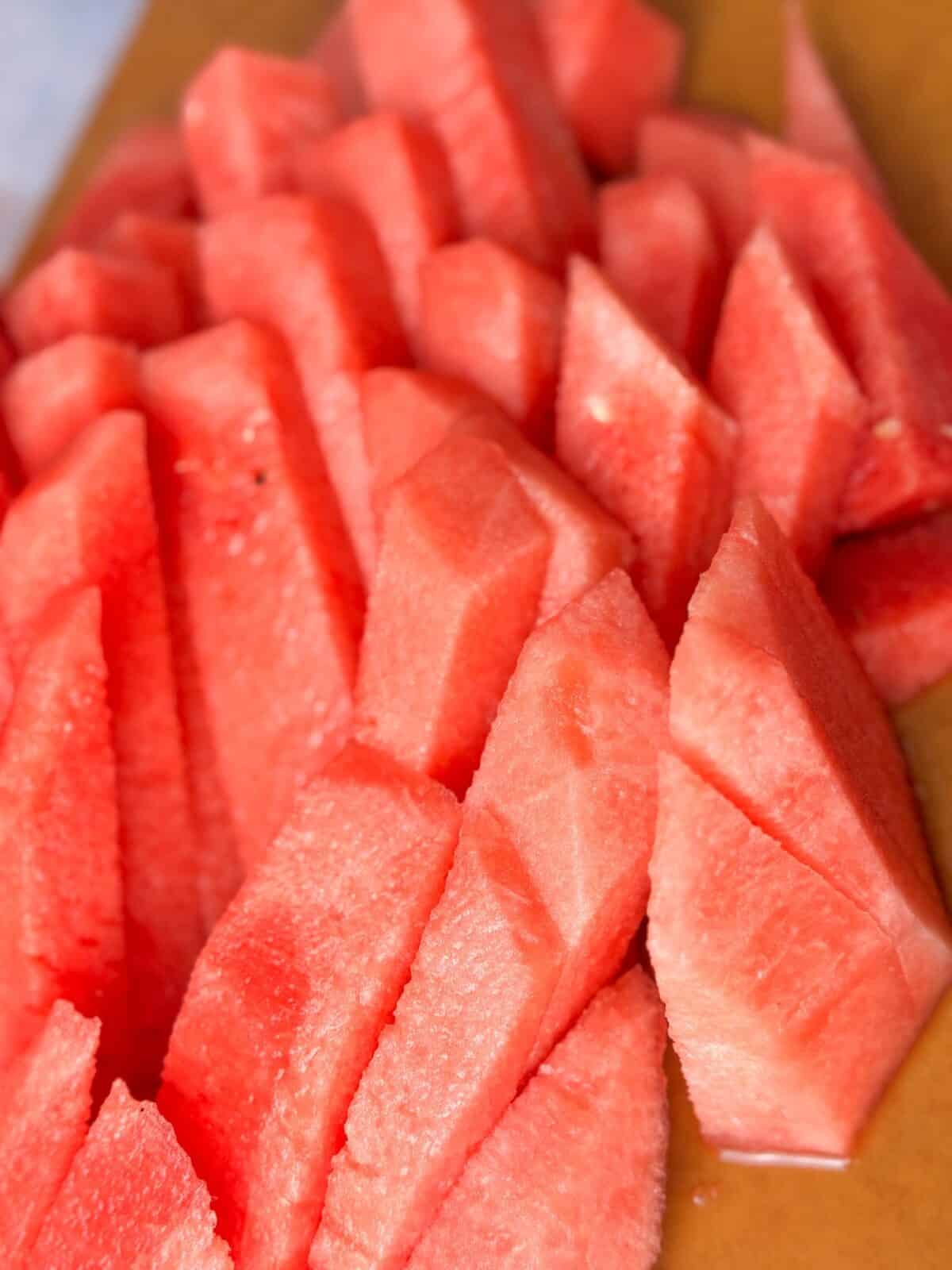
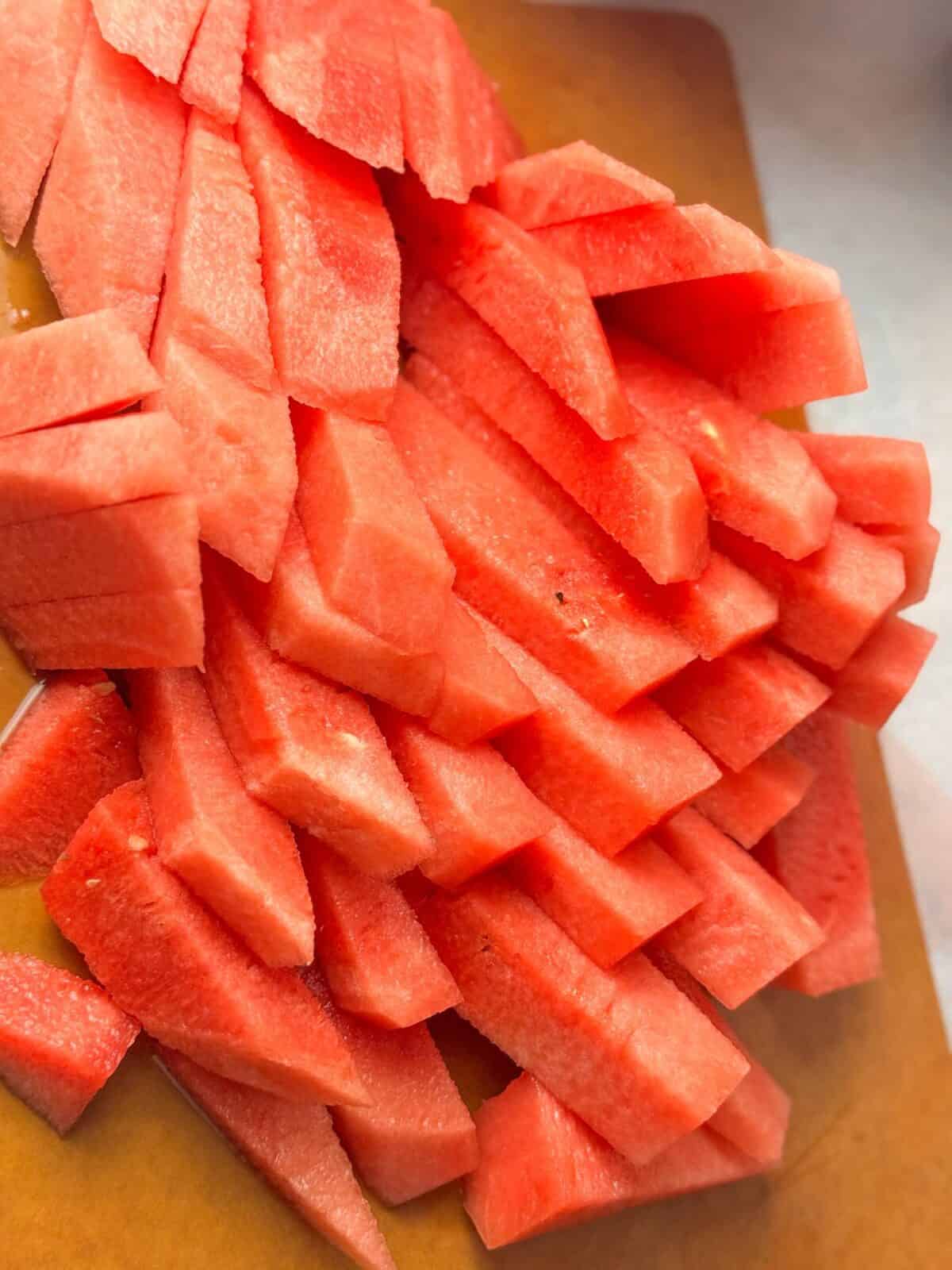
Repeat with the second half of the watermelon. You’ll have uniform, juicy sticks that are easy to grab and eat!
Helpful Tips
Choose the right watermelon: Look for a ripe watermelon that is uniformly round or slightly oval for even sticks.
Wash before cutting: Even though you don’t eat the rind, it is best to wash it to prevent transferring dirt or bacteria to the fruit when cutting.
Chill before you cut: Pop your watermelon in the fridge for a few hours before slicing. A cold watermelon not only cuts more cleanly but also makes each piece extra refreshing.
Stabilize the watermelon: Cut a thin slice off both ends first so it sits flat on the cutting board. This prevents rolling and makes slicing safer.
Use a sharp knife: A large, sharp chef’s knife makes clean cuts through the thick rind and juicy flesh. A dull knife can slip and crush the fruit.
Remove the rind carefully: Stand the watermelon on its flat end and cut down along the curve to remove the rind in strips. Try to follow the natural curve to minimize waste.
Slice evenly: Cut the watermelon flesh into slabs about 1–1½ inches thick. Then cut each slab into sticks of the same width so they look uniform and are easy to grab.
Seed removal: If your watermelon has seeds, you can remove them while cutting the slabs. Seedless watermelons are simpler for sticks.
Storage Tips
Once you’ve cut your watermelon into sticks, proper storage is key to keeping them crisp and juicy.
Cut only what you’ll eat within 2–3 days. Watermelon is best enjoyed fresh, so avoid cutting the whole fruit if you don’t need to.
Keep it fresh. Place your watermelon sticks in an airtight container or tightly cover them with plastic wrap. Store them in the fridge, where they’ll stay fresh and hydrated for about 3–4 days.
Frequently Asked Questions
Yes! Store them in an airtight container in the fridge for up to 3 days.
No, the rind actually makes watermelon sticks easier to hold.
Wrap tightly or store in an airtight container to prevent it from drying out.
More How-To Useful Topics
Healthy Recipes
How to Dry Fruits in the Oven
Tips and Tricks
How to Make Sea Moss Gel
Kid Friendly
How to Peel Hard Boiled Eggs in Under 10 Seconds
Tips and Tricks
How to Clean & Store Veggies to Stay Fresh

How to Cut a Watermelon into Perfect Sticks
Equipment
- sharp knife
- cutting board
Ingredients
- 1 Watermelon
Instructions
- Place the washed watermelon on a large cutting board, then slice off both ends (the top and bottom) to create flat surfaces.
- Start from the top and carefully slice downward following the curve of the fruit to remove the rind and the white flesh beneath it. Rotate the watermelon as you go until all the rind is removed.
- Stand the watermelon upright on one of the flat ends. Cut it straight down the middle to create two large halves.
- With the watermelon half still flat on the board, cut it into even slices about ½ inch thick.
- Turn the watermelon 90°. Slice again, this time about 1 inch apart, to create long stick-like pieces.
- Repeat with the second half of the watermelon. You’ll have uniform, juicy sticks that are easy to grab and eat!